


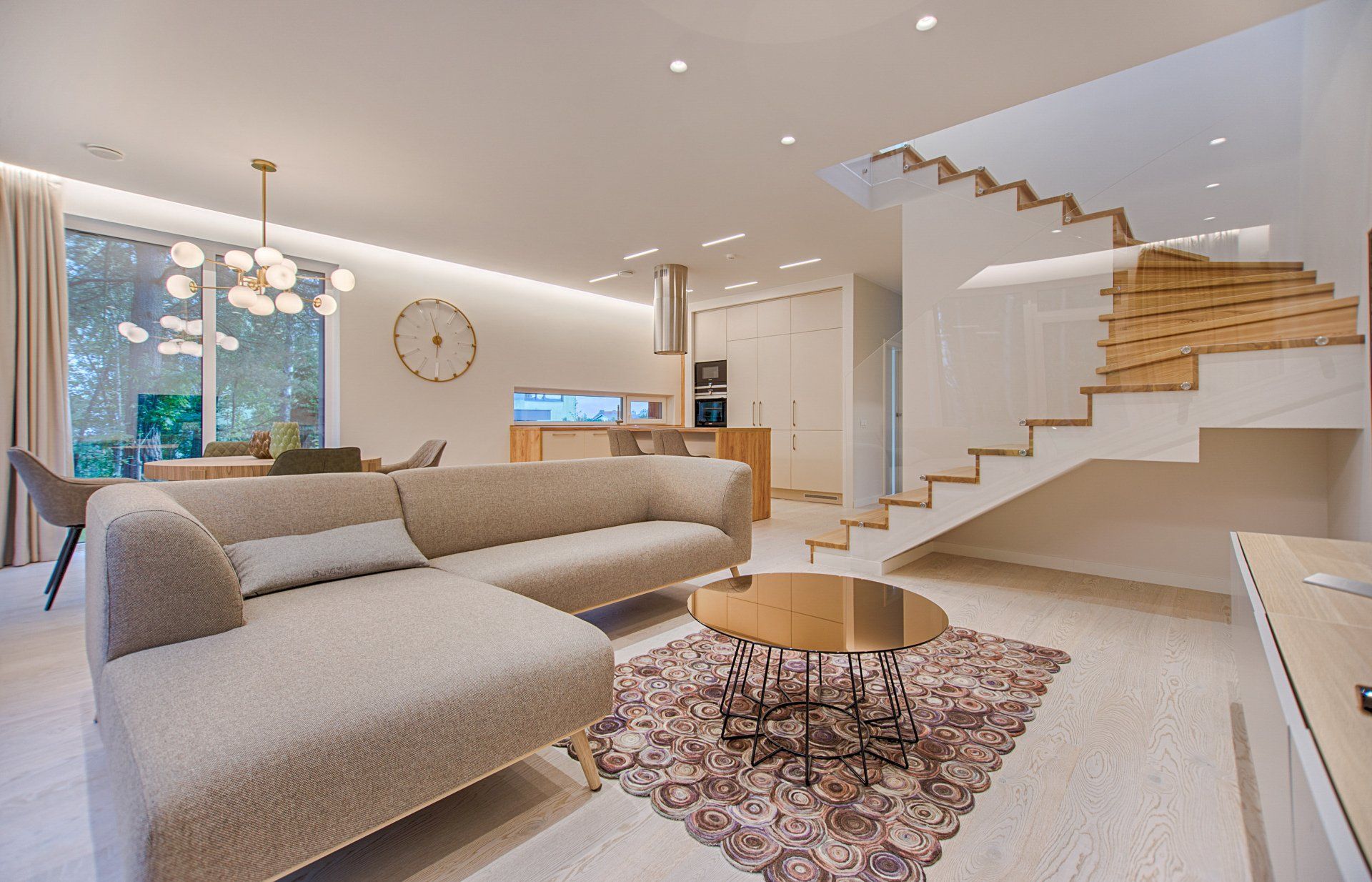
What Is WFR? A Complete Guide to WELL for residential Healthy Home Certification
What is WFR (WELL for residential)?
WFR (WELL for residential) is the residential health certification launched by the International WELL Building Institute (IWBI) at the end of January 2024. Built on the WELL Building Standard and redesigned specifically for homes, it covers more than 100 health strategies. The unit of certification is each home: a home that earns 40 of 211 points becomes a "WELL Residence." There are no Bronze, Silver, Gold or Platinum levels and no preconditions. In a multifamily building, every home must be enrolled together, and the review samples a subset of homes; projects can earn precertification during design and apply for full certification after completion.
WFR at a Glance
| Organizer | International WELL Building Institute (IWBI) |
|---|---|
| Launch | January 30, 2024 (U.S. Eastern Time), with 25 pilot participants and nearly 30,000 homes at launch |
| Applies to | New and existing housing: single-family homes, units in multifamily buildings, social housing, rental and for-sale housing, student housing and senior housing |
| Unit of certification | Each home; an entire multifamily building or community must be enrolled together |
| Scoring structure | Ten concepts plus Innovation: more than 60 features and more than 100 parts, out of 211 points |
| Threshold | 40 points per home; no preconditions and no levels |
| Stages | Precertification (design stage, optional) → certification (after completion) |
| Official fees | Enrollment fee US$3,000; program fee US$100 per single-family home, or US$0.08 per sq ft for multifamily (minimum US$8,000, maximum US$98,000) |
WFR's 10 Concepts and Points
WFR keeps WELL's ten concepts and adds Innovation; feature codes begin with "R-" (for example, R-T01 Thermal Performance). All features are optional, and there is no minimum score per concept.
| Concept | Features | Available points |
|---|---|---|
| Air | 10 | 33 |
| Water | 6 | 23 |
| Nourishment | 4 | 10 |
| Light | 4 | 19 |
| Movement | 7 | 13 |
| Thermal Comfort | 7 | 19 |
| Sound | 4 | 19 |
| Materials | 4 | 20 |
| Mind | 5 | 13 |
| Community | 7 | 22 |
| Innovation | 4 | 20 |
| Total | 62 | 211 |
Source: IWBI, WELL for residential Guidebook, February 2026 edition. Feature counts follow the guidebook's table of contents; IWBI's own description is "more than 60 features and more than 100 strategies."
Unit of Certification: Why "Each Home"?
WFR certification results apply to each home: a home confirmed in review to reach 40 points becomes a WELL Residence. But a multifamily building cannot apply with just a few homes; every home in the building must be enrolled together.
- Sampled review: when multiple homes pursue the same feature, IWBI randomly samples a number of homes equal to the square root of the total, rounded down; for example, 10 of 100 homes or 5 of 27.
- One failure loses the feature for everyone: if any sampled home does not comply, no home pursuing that feature earns it in that round.
- One approach per feature: every home must use the same design or product; for tiered features, if homes achieve different tiers, the lowest tier is credited.
- Scope of assessment: includes the home's interior, its private balcony or yard, and shared spaces such as the lobby and gym; some features assess the home's interior only.
- Selling the home does not affect certification: if the enrolling party sells the property, the home's WELL Residence status is unaffected.
How Do Precertification and Certification Differ?
| Precertification | Certification | |
|---|---|---|
| When to apply | Before substantial completion of construction (design or construction stage) | After the homes and shared areas are substantially complete |
| Threshold | Each home commits to implementing at least 40 points | Each home is confirmed in review to reach 40 points |
| Documentation | Design drawings, specifications, calculations and simulations, operations plans, letters of assurance and more; drafts may be submitted first | Adds photos, proof of purchase, on-site test results and contractor letters of assurance |
| Seal | Digital and print marketing only, without a year, and no physical plaque | Digital and physical seals, always showing the year earned |
| Required? | Optional | The goal |
IWBI regulates the wording: a precertified home may only be described as a "precertified WELL Residence," not as "a WELL Residence," "WELL Certified" or a "WELL-certified home." A project that has only enrolled and has not yet been precertified may only say it is "enrolled in WELL for residential." Even after full certification, it may not be called "WELL Certified," to distinguish it from WELL v2 certification.
Is On-Site Testing of Air, Water Quality and More Required?
Not necessarily. Only 9 WFR features involve on-site testing, and all of them are optional; some of these features offer both an on-site testing path and a design-specification path.
| Concept | Features involving on-site testing |
|---|---|
| Air | R-A01 Ventilation Design, R-A03 Pollution Infiltration Management (envelope airtightness), R-A07 Indoor Air Quality, R-A08 Radon Risk |
| Water | R-W02 Water Quality Testing |
| Thermal Comfort | R-T04 Humidity Control |
| Sound | R-S01 Sound Insulation, R-S03 Mechanical Equipment Noise, R-S04 Environmental Noise |
Testing must be performed by qualified professionals (for most features, including IWBI-approved WELL Performance Testing Agents) after completion and installation of systems, within 12 months before submission; multifamily projects are likewise tested on a sample of homes.
The WFR Application Process
-
1. Enroll the project
On IWBI's platform, enter the housing type, number of homes and floor area, accept the agreement and pay the enrollment fee. Each enrollment is valid for 3 years and includes up to two review rounds; portfolios of 5 or more buildings can opt for an annual subscription.
-
2. Select features and plan strategies
Choose achievable features based on the project's conditions. Since there are no preconditions, projects can prioritize items the design already includes or that cost less.
-
3. Precertification (optional)
Submit drawings, specifications and operations plans during design to become a "precertified WELL Residence," which can be used in pre-sale marketing.
-
4. Construction and on-site testing
Build as committed; if features requiring testing are selected, engage a qualified party after completion to test the sampled homes.
-
5. Final review and certification
First submit the cover page so IWBI can select the sample homes, then submit documents for the sampled homes and shared documents. After preliminary and final review, the final report lists each home's score, and homes that qualify become WELL Residences.
How Much Does WFR Certification Cost?
Paid at enrollment; valid for 3 years.
US$100 per single-family home; US$0.08 per sq ft for multifamily. Minimum US$8,000 and maximum US$98,000, paid at submission.
On-site testing fees (when testing features are chosen), consulting fees, and incremental design and equipment costs to meet the features.
Take a multifamily building in Taiwan with a total floor area of about 3,000 ping (about 106,700 sq ft): the program fee is about 0.08 × 106,700 ≈ US$8,500, or about US$11,500 including the enrollment fee. This example only illustrates the calculation; it excludes testing and consulting fees, and IWBI's quote prevails.
Fees follow IWBI's "How much does WELL for residential cost?" (updated October 2026).
How Is WFR Different from WELL v2 Certification?
| Item | WFR | WELL v2 (offices, etc.) |
|---|---|---|
| Unit of certification | Each home | The entire project space |
| Preconditions | None | Yes; all must be met |
| Levels | A single WELL Residence (40/211 points) | Bronze, Silver, Gold, Platinum |
| On-site testing | Only 9 features involved; optional; tested on sampled homes | Performance verification required |
| Validity | Not specified by IWBI; the seal shows the year earned | Recertification every 3 years |
| Marketing wording | WELL Residence; may not say WELL Certified | WELL Certified (with level) |
| Pricing | Per home or per sq ft, with minimum and maximum | By area |
How Does WFR Work with Taiwan's EEWH Green Building Label and BERS Energy Rating?
| Item | WFR | EEWH green building label | BERS building energy rating |
|---|---|---|---|
| Organizer | IWBI (U.S.) | Architecture and Building Research Institute (Ministry of the Interior), Taiwan Architecture and Building Center | Architecture and Building Research Institute (Ministry of the Interior), Taiwan Architecture and Building Center |
| Focus | Occupant health and well-being | Ecology, energy saving, waste reduction, health | Building energy use and efficiency |
| Unit of assessment | Each home | Whole building | Whole building or dwelling unit |
| Levels | A single WELL Residence | Qualified to Diamond | 1+, and 1 to 7 |
| Regulation | Voluntary | Mandatory for public buildings; often used for floor-area bonuses | Public new buildings already have energy efficiency requirements |
The three assess different things, and Taiwanese developments commonly pursue them in parallel: the EEWH label and BERS rating respond to regulations and energy savings, while WFR turns "healthy living" into a specification that a third party can verify. WFR's innovation feature R-I03 grants 3 points for 18 international green building programs such as LEED and BREEAM, but Taiwan's EEWH label is not on the list. Further reading: " What Is the EEWH Green Building Label?", " What Is the BERS Building Energy Rating?".
Which WFR Projects Are There in Taiwan?
- Baopu Construction (寶舖建設): announced with IWBI in January 2024 that it had joined WELL for residential, one of the first developers in Taiwan to participate publicly.
- Projects advised by GreenJump: Chiron Property, advised by GreenJump, earned Taiwan's first WFR precertification, and the Joerich (富喬易境) project earned Taiwan's first WFR certification. Chiron's second project, Chiron OSMOSIS, also earned whole-building precertification in October 2026; see " Chiron Property's Second Project Earns WELL Healthy Home Precertification".
- For comparison: Joyear Land's (久年置地) residential project on Heping East Road earned Silver under WELL Core (not WFR), showing that multifamily housing can also follow the WELL v2 route.
IWBI's WELL project directory does not currently list WFR projects. For more WELL projects in Taiwan, see " WELL-Certified Buildings in Taiwan".
Will One WELL Replace WFR?
In December 2025, IWBI announced that WFR will "graduate" from its pilot when the next-generation standard, One WELL, launches in 2026; One WELL has already absorbed several residential pilot features, such as residential smoking bans and bedroom noise thresholds. As of November 2026, IWBI has not announced the official launch of One WELL, WFR is still accepting enrollments, and how enrolled projects will transition is pending IWBI guidance.
WFR FAQ
What is WFR?
WFR (WELL for residential) is the residential health certification IWBI launched at the end of January 2024. Built on the WELL Building Standard and designed specifically for homes, it covers more than 100 health strategies. A home that earns 40 of 211 points becomes a WELL Residence; there are no levels and no preconditions.
Can only a show unit or a few homes be certified?
No. In a multifamily building, every home must be enrolled together. Certification and scores are calculated per home, but the review samples only the square root of the number of homes, so not every home needs to submit drawings and photos; if any sampled home fails, no home earns that feature.
Does WFR have Gold or Platinum levels?
No. WFR has a single WELL Residence certification, earned at 40 points per home. Performance can only be compared by score, for example "this home earned 45 points." Bronze, Silver, Gold and Platinum are WELL v2 levels.
How much does WFR certification cost?
Under IWBI's official pricing: an enrollment fee of US$3,000; a program fee of US$100 per single-family home, or US$0.08 per sq ft for multifamily, with a US$8,000 minimum and a US$98,000 maximum. For small and mid-sized multifamily buildings the certification fee is usually near the minimum; testing, consulting and incremental design and equipment costs are extra, and IWBI's quote prevails.
Can WFR be used in pre-sale marketing?
Yes, but only after earning precertification, and only with IWBI-approved wording such as "precertified WELL Residence"; not "WELL-certified home" or "WELL Certified." The precertification seal may only be used in digital and print materials, not on a physical plaque. A project that has only enrolled may only say it is "enrolled in WELL for residential."
How long does WFR certification take?
Precertification can be submitted during design, without waiting for completion; certification must wait until the homes and shared areas are substantially complete, and on-site testing must be completed within 12 months before submission. Each enrollment is valid for 3 years and includes up to two review rounds; IWBI has not published standard review times per round.
Can resale or existing homes apply?
Yes. WFR covers new and existing housing; homes more than a year old must also meet basic conditions such as no visible peeling or cracking paint and no damaged flooring or insulation.
Is air and water quality testing required?
Not necessarily. Only 9 features involve on-site testing, and all features are optional. To promote measured air quality, a project must select features such as Indoor Air Quality and have qualified professionals test a sample of homes.
Does an existing EEWH green building label earn points in WFR?
WFR's innovation feature R-I03 grants 3 points for 18 international green building programs such as LEED and BREEAM, but Taiwan's EEWH label is not on the list. The two assess different things: EEWH leans toward the environment and energy saving, WFR toward occupant health, and Taiwanese developments often pursue both.
Does WFR help home prices?
Evidence is still limited and mostly anecdotal. An IWBI article notes that WELL Residence tenants at Albion Court in London pay 20% more rent than uncertified tenants in the same building, but this is a single case. The more certain value is using third-party verification to show living quality (air, water, light, sound and thermal comfort) as a basis for product differentiation and brand trust.
Want Your Development to Earn WFR?
GreenJump provides WFR feasibility assessment, feature strategy planning, and precertification and certification consulting, helping developers explain healthy homes clearly from the pre-sale stage.

