Escape Service Project
E-World provides corporate clients with comprehensive sustainable building design strategy analysis and consulting, and implements international certification consulting services such as GRESB, LEED, and WELL, including the selection of sustainable building materials, product specifications, lighting, daylighting, natural ventilation, and spatial layout planning.
We provide customized consulting strategies based on our clients' needs to help them fulfill their corporate social responsibility and effectively achieve their sustainability goals.

GRESB Real Estate Sustainability Consulting Services
The Global Real Estate Sustainability Benchmark (GRESB) is an investor-centric rating organization dedicated to assessing the ESG performance of the global real estate industry. It provides a comprehensive ESG strategy framework and standardized and verified ESG data, enabling investors to clearly understand the commitment and achievements of various companies in sustainable development.

LEED Green Building Consultant Services
LEED, established by the U.S. Green Building Council (USGBC), is a green building certification system that offers significant benefits in energy conservation, carbon reduction, indoor environmental quality, and environmental impact reduction. It is applicable to new buildings, existing buildings, and interior renovations. Currently, it provides the most effective green building design solutions for major domestic and international technology companies and large commercial buildings, helping them achieve their sustainable development goals.
Carbon and Natural Capital
E-Focus provides internationally aligned carbon asset management services, assisting enterprises in mastering forward-looking carbon reduction technologies in advance on the path of low-carbon transformation, establishing a diversified, solid and practical carbon asset management system, responding positively to transformation challenges, achieving carbon reduction goals, and realizing the sustainable survival of enterprises and the environment.

WELL Healthy Building Consultant Services
Based on medical research, WELL combines behavioral science, building science, and health science to form specific and measurable standards. It is the first set of building standards in the world to be developed for the health and well-being of building users, and certification can only be obtained after on-site audits and performance tests by international third-party organizations.
Human-based architectural analysis
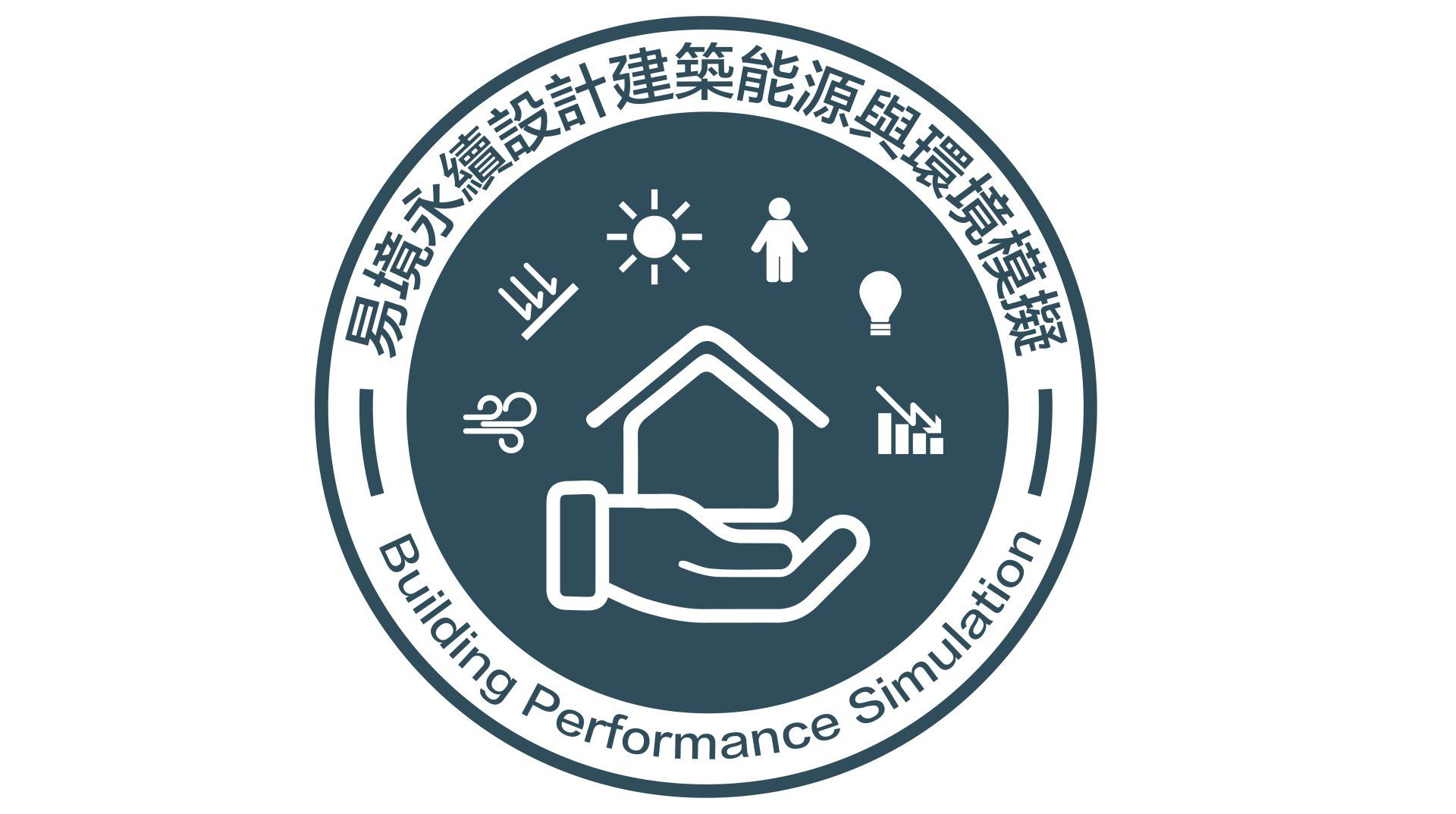
For different issues, computer technology is used to conduct simulations and predictions, and the results are analyzed. For example, the energy consumption of buildings and the intensity and patterns of simulated airflow are calculated to propose more optimized strategies to assist in building design and improve comfort. This achieves the goals of green buildings that are comfortable, healthy, and environmentally friendly.

EEWH Green Building Consulting Services
The Taiwan Green Building Label (EEWH) covers the categories of "ecology, energy conservation, waste reduction, and health." Developed from Taiwan's energy-saving design regulations, it is a national-level green building certification standard and the fourth green building assessment system globally.
FAQs
Q1. What are the building sustainability certifications available in Taiwan? How do I choose the right one?
Common building sustainability certifications in Taiwan include international systems like LEED (Green Building), WELL (Healthy Building), and GRESB (Real Estate Portfolio Rating), as well as local certifications such as the EEWH Green Building Label, Smart Building Label, BERS (Building Energy Efficiency Label), and LEBR (Low Carbon Building Label). The choice depends on the objective: LEED/WELL/GRESB to attract international tenants or investors; WELL if employee health is a priority; and EEWH, BERS, or LEBR if applying for floor area ratio bonuses or complying with regulations.
Q2. What are the differences between LEED and Taiwan EEWH green building certifications? Can I apply for both at the same time?
LEED is an international certification from the U.S. Green Building Council (USGBC), highly recognized by international tenants and foreign investors; EEWH is a local certification from Taiwan's Ministry of the Interior, linked to incentives such as floor area ratio bonuses and urban planning approvals. While their assessment logics differ, their documentation can be largely shared, and applying for both simultaneously can spread costs; many landmark commercial office buildings adopt a dual-certification strategy.
Q3. What are the responsibilities of a green building certification consultant? Why is a consultant needed?
Certification consultants are responsible for feasibility assessments, scoring strategy planning, cross-team integration (architects, MEPs, interior designers), document preparation, and review and defense. Certification involves hundreds of technical documents and simulation analyses, and self-application often results in additional costs due to strategic errors; the value of consultants lies in achieving the target rating at the lowest possible cost.
Q4. How long does it typically take for building sustainability certification to take?
Depending on the type of certification and the stage of the project: LEED or WELL certifications for new construction projects typically take 2–4 years from design to completion; certifications for existing buildings take approximately 6–18 months; GRESB ratings open in April and close in July each year, operating on an annual cycle. The earlier the process is implemented in the design phase, the better the timeline and cost-effectiveness.
Q5. How is the cost of applying for green building or healthy building certification estimated?
The total cost includes the certification body registration and review fees, consultant service fees, and additional engineering costs incurred to achieve compliance. Certification fees are calculated based on floor area; consultant fees are quoted based on project size and target level; incremental engineering costs, if incorporated in the early design phase, can typically be kept within 1-3% of the total cost. Actual amounts will be quoted upon negotiation based on project conditions.
Q6. What is the relationship between the ESG report and green building certification?
Green building and healthy building certifications are the most concrete third-party evidence for the environmental (E) and social (S) aspects of an ESG report, directly corresponding to GRI, SASB disclosure indicators, and GRESB scoring items. Obtaining building certification first, and then incorporating it into a sustainability report, is the most efficient ESG path for real estate companies.
Q7. What kind of company is Easeworld? What official qualifications does it have?
GreenJump Sustainability is a sustainable building consultancy founded in Taiwan in 2014. Its services cover LEED, WELL, GRESB, EEWH, carbon asset management, carbon credit development, and AI-based energy-saving control. The company is an official GRESB partner, an IWBI Keystone member, and the only WELL EP provider in Taiwan, with offices in Vietnam, Thailand, and Malaysia.
Q8. What are some representative case studies of E-Jing's service achievements?
Representative cases include: the first international LEED WELL Gold certified commercial office building in Taiwan (Taipei World Trade Center International Trade Building), Dingyue Office Park receiving a GRESB five-star rating (the first in Taiwan), the first LEED certified McDonald's in Taiwan, the world's first WELL semiconductor factory, and the world's first building demolition project to implement UL2799 zero waste disposal certification.
Q9. Can small and medium-sized enterprises or single offices also obtain sustainability certification?
Yes. Both WELL and LEED have an Interior category, applicable to single-story offices; LEED also has an Existing Building Operations (O M) category. Small and medium-sized enterprises often start with WELL certification or energy diagnostics for their offices, which is far less costly than whole-building certification and can also serve as ESG evidence.
Q10. What are the actual impacts of the 2050 net-zero policy on building owners?
Taiwan's 2050 Net-Zero Pathway requires the construction sector to gradually achieve near-zero carbon buildings, and the Financial Supervisory Commission also requires listed companies to disclose climate risks. Practical impacts include: new construction projects will face energy efficiency regulations (BERS labeling), existing buildings will need energy-saving improvements, and investors and tenants will begin to screen assets based on ESG performance. Assets that have early certification and carbon management will enjoy valuation and rental advantages.