


The New Net-Zero Landscape of 2026: How Is LEED v5 Redefining Building Sustainability? Frontline Insights from GreenJump as a Consultant
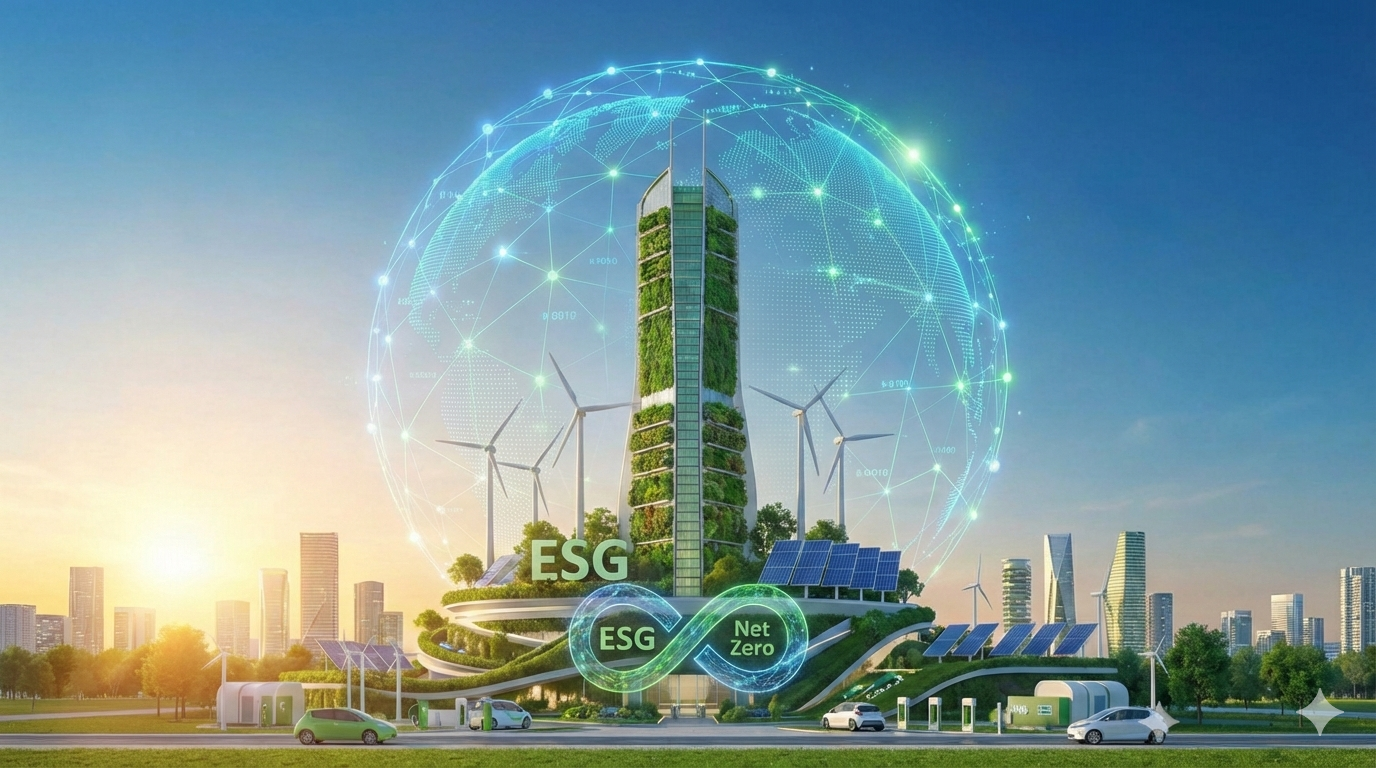
Cover image created by the GreenJump team with AI digital tools
November 2026 Update
This article was first published in January 2026. The following information has since changed:
- USGBC has extended the registration deadline for new LEED v4/v4.1 commercial projects from June 30, 2026 to June 30, 2027; v4/v4.1 and v5 are currently running in parallel.
- LEED v5 was officially launched and opened for registration in April 2025, with certification opening progressively in the second half of 2025.
For the latest full explanation, see: What Is LEED? LEED Green Building Certification Levels, v5, Process and Costs
As the world formally entered the first critical carbon-reduction checkpoint of the Paris Agreement in 2025, the building industry stands at a turning point it cannot avoid. According to the 2024/2025 Global Status Report for Buildings and Construction recently released by the United Nations Environment Programme (UNEP), buildings and their related industry chain account for 34% of global energy-related carbon emissions and 32% of energy demand. These figures mean that buildings are no longer merely fixed assets on a corporate balance sheet, but the core vehicle that shows whether a company has genuine ESG execution capability and credibility in its net-zero transition.
For Taiwanese companies, this shift is especially critical. As global supply chains, capital markets and international tenants begin to use “international comparability” as their benchmark for judging sustainability, buildings will become the most direct, and least replaceable, evidence.
The Real Challenge of 2025: From “Operational Decarbonization” to “Whole-Life-Cycle Net Zero”
Entering 2025, international regulatory and disclosure frameworks have clearly shifted toward “whole-life-cycle” thinking. Whether under the IFRS Sustainability Disclosure Standards or the EU’s CSRD directive, the focus is no longer only on energy efficiency during operation; companies are further required to disclose embodied carbon, namely the carbon emissions a building accumulates through material production, transport, construction and replacement. This is the core context behind the official launch of LEED v5 in 2025.
LEED v5 is not merely an upgrade of an existing standard, but a reset of what building sustainability means: it pulls “carbon-reduction responsibility” forward from the operational stage to the very starting point of design and investment decisions. For Taiwanese companies that have long relied on exports, foreign investment and multinational clients, LEED v5 also sends a clear signal: sustainability is no longer a matter of everyone using their own definitions; it must now align with a common global language.
Key Changes in LEED v5: Three Core Pillars
In our consulting practice, GreenJump has observed that the biggest difference in LEED v5 lies not in tougher scoring, but in a complete shift in scoring logic. LEED v5 is built on three core pillars that help companies align with the 2030 and 2050 decarbonization milestones.
1. Decarbonization
For the first time, LEED v5 formally elevates “embodied carbon” to the same level of importance as “operational carbon”. For Platinum projects, all-electric design, 100% renewable energy use and at least a 20% reduction in embodied carbon are no longer optional extras but structural thresholds; this means that material choices, structural systems and construction strategies will directly affect certification feasibility and asset value.
2. Quality of Life
LEED v5 explicitly responds to the “S” (social) dimension of ESG, strengthening indoor air quality, thermal comfort, daylighting and biophilic design. Amid labor shortages and increasingly fierce competition for talent, buildings have become a key factor in employee retention, brand appeal and operational stability, rather than a mere cost item.
3. Ecological Resilience
As extreme weather becomes the norm, LEED v5 requires buildings to have real capacity to respond, including to heat waves, torrential rain and water-resource shocks. For Taiwan, located in the subtropics where climate risks are rising rapidly, this is not just an international trend but a pressing, real-world issue.
Key LEED v5 Timeline
- End of March 2025: LEED v5 officially opens for registration and certification.
- June 30, 2026: LEED v4 and v4.1 close to new project registrations; existing projects may continue under their original version until 2032.
In practice, because LEED v5 adds several new prerequisites, such as a whole-building life-cycle carbon assessment (LCA), GreenJump recommends that companies launch integrated planning no later than the 20% design-completion stage; otherwise, carbon-emission and certification risks are often discovered only after the design is finalized, and the best window for adjustment is missed.
GreenJump’s Perspective: More Than a Certification Label, LEED v5 Is a Strategic Tool for Proactive Asset Empowerment and Value Optimization
LEED v5 is a key springboard for Taiwanese companies to move from “compliance” to “asset empowerment”. From the consultant’s side, we clearly see that green building certification is no longer a simple paperwork exercise, but a highly sophisticated tool for managing asset value. In the past, companies may have viewed LEED as a “sticker”; but after 2025, the truly competitive companies will be owners who bring in integrative design (IP), digital simulation and whole-life-cycle thinking from the earliest planning stage. The consultant’s role has likewise shifted from helping to “earn the points” to helping companies forecast carbon risk, manage the cost of capital and create a long-term asset premium.
For Taiwan, LEED v5 is also a passport for dialogue with international markets. In an era when global capital and supply chains are accelerating the phase-out of high-carbon assets, LEED v5 is not just a technical manual but the best blueprint for companies to demonstrate governance capability, sound sustainability decision-making and international trust in a low-carbon economy. GreenJump believes the real winners will be the companies that understand this change in the rules early and turn sustainability into competitiveness.

