


Revealing the Value of Healthy Green Buildings in Practice
November 2026 Update
This article was first published in August 2023. The following information has since changed:
- The 2026 edition of Taiwan's EEWH Green Building Label has been released, consolidating its indicators from 9 into 6. It becomes mandatory from July 1, 2030; until then, the 2023 edition (9 indicators) may still be used.
- LEED v5 was launched in 2025 with revised credit categories; Innovation and Regional Priority have been merged into "Project Priorities".
For the latest full explanation, see: What Is Taiwan's EEWH Green Building Label? Nine Indicators, the 2026 Edition, Levels and Application Process and What Is LEED? LEED Green Building Certification Levels, v5, Process and Costs
Against the backdrop of global resource scarcity and climate change, people have broadly come to recognize the importance of sustainability. Sustainable development is not merely a slogan but an essential approach to achieving comprehensive development, today and in the future. It concerns our survival, our economy and our social progress. Only through sustainable development can we ensure that our planet remains healthy, prosperous and harmonious over the long term. As one of the building sector's strategies for responding to increasingly severe environmental challenges, green building has become a key trend.
Green Building
Architectural design grounded in human health and comfort, pursuing coexistence and shared prosperity with the Earth's environment and the sustainable development of the human living environment.
— Architecture and Building Research Institute, Ministry of the Interior
The fundamental purpose of a building is to be lived in and used, and green buildings are no exception. Green building is an approach to design and construction founded on environmental protection, energy efficiency and sustainability, covering every stage of the building life cycle, from site selection and design to construction and operation. Green building is not merely a theoretical concept; it is grounded in real data and results. While reducing environmental impact, it also attends to human comfort, and by saving energy it reduces costs, allowing buildings to be operated sustainably. This is the core value of green building.
Green Building: Built for Sustainable Human Use
Green building is an important pathway to sustainable development. Through its environmentally friendly, energy-efficient, healthy and socially inclusive characteristics, it achieves comprehensive sustainable development goals at every level. Its application in everyday buildings has also made clear progress on many fronts, and statistics from countries and organizations further highlight the feasibility and value of green building.
Through green building design and technologies such as high-efficiency insulation materials, optimized heating and cooling systems and smart lighting, buildings can use energy far more efficiently, lowering their energy demand and thereby reducing energy expenditure. Renewable or recyclable materials are chosen wherever possible to reduce reliance on finite resources, and waste management and water use likewise aim for more resource-efficient patterns, saving operating costs.
According to Ministry of the Interior estimates, as of June 2023 nearly 12,000 green buildings had obtained the label or candidate status. Together they save 2.6 billion kWh of energy and more than 120 million m³ of water each year, generating economic benefits of over NT$10 billion.
Indoor environments are spaces that people occupy for long periods, so indoor comfort and health deserve even greater emphasis. Indoor air quality can be improved through smart ventilation systems, low-VOC (volatile organic compound) materials, more natural ventilation and daylighting, and indoor greenery.
The improvements in indoor environmental quality brought by green buildings nourish not only physical health but also mental well-being.
In the face of global net-zero goals and supply chain pressures, choosing to occupy green-certified buildings has become part of how companies pursue their decarbonization targets. Buildings with green building certification enjoy a competitive advantage in the market and generally command higher property values.
According to a CBRE industry survey on the value of ESG goals, 79% of respondents said green building certification influences their real estate decisions, and nearly half said they are willing to pay a premium for green-certified buildings; 75% said a building's resilience to the impacts of climate change influences their real estate decisions, and nearly 40% said they are willing to pay a premium for highly resilient buildings.
Embedding sustainability value at the core of a business can strengthen its image of social responsibility and win the support and recognition of the public and stakeholders.
Green building design looks beyond the building itself; a building is also a vessel for society. Through design, sharing and sustainability, and by considering interaction with the surrounding community, green buildings bring people together, fostering interaction among residents and creating a more harmonious social environment.
Although green building currently shows a positive trend, many challenges remain to be overcome. The upfront cost of green buildings is usually higher, mainly because of the investment required for high-efficiency energy systems, eco-friendly materials and technologies, which may put some people off; in the long run, however, green buildings typically achieve greater energy and resource savings and thus lower operating costs. In practice, buildings may fail to deliver the expected energy savings; consumers and investors find it hard to judge a project's actual environmental benefits; and materials that are difficult to source may require higher transport costs, increasing carbon emissions. Nevertheless, with technological progress, policy support and growing public environmental awareness, the future of green building holds limitless possibilities, and it will become an important part of achieving sustainable development goals.
Introduce Simulation and Prediction to Prevent Controllable Risks and Achieve Intended Results
Sometimes a green building plan may look very attractive on the surface but face many challenges in actual operation, such as improperly operated equipment or occupant behavior that differs from expectations. By introducing building environmental analysis, these potential problems can be predicted and resolved at the design stage; different design options can be compared and their energy-saving potential evaluated, ensuring that the building achieves the expected energy savings in actual operation and delivers real benefits. It also supports architectural design, urban design reviews, environmental impact assessment reports and more. For LEED certification, which emphasizes environmental protection and resource conservation, energy simulation has become an indispensable step in the application process for new buildings, and it is closely tied to areas such as energy savings, renewable energy, and the measurement and verification of energy systems.
Building environmental analysis builds models of a building's natural environment and operational information during the design stage and runs calculations on them, analyzing climate, energy and thermal comfort results in depth. It reveals potential strengths and challenges, keeps risks within a controllable range and provides better-founded guidance for decision-making, helping owners evaluate and adjust the building design to arrive at the solution best suited to both the environment and its users.

Improves pedestrian comfort on site, avoids the effects of strong winds and achieves comfortable ventilation.
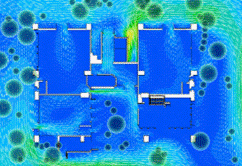
Simulates the effects of natural and mechanical ventilation indoors to support design that improves comfort.
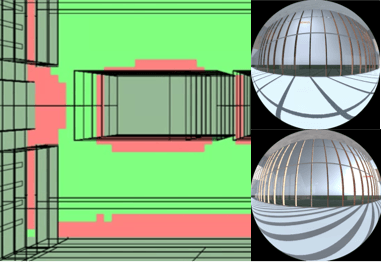
Improves indoor lighting comfort and electric lighting efficiency, and prevents indoor glare in line with the WELL Building Standard.
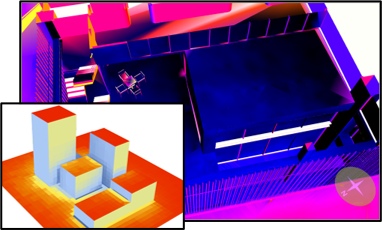
Simulates solar thermal radiation across the year's sunshine hours to support energy-efficient building design.
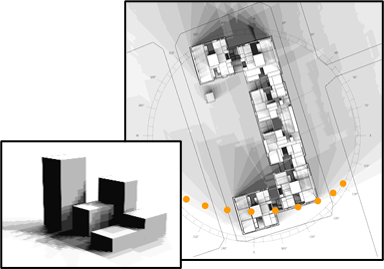
Provides sunshine-hour analysis to safeguard access to sunlight, and can inform planting layouts based on sunshine hours to improve plant survival rates.
Photo / Illustrative simulation results. Produced by GreenJump Sustainability.
Because a future building's energy consumption can be simulated by computer from known building conditions and environmental information, its performance can be predicted and the data analyzed to select low-energy design options. However, the cost of simulation differs depending on when it is introduced. Simulation is built on the level of model detail: the earlier it is introduced, the lower the precision required, so more usable data can be generated up front, avoiding major adjustments at the next design stage and saving time and costs in labor, construction and back-and-forth communication. Data show that introducing simulation at the predesign stage offers an 80% potential saving in design costs, but this drops to 50% if simulation is only introduced at the schematic design stage. Therefore, to maximize the long-term environmental and cost benefits, the earlier simulation is introduced, the greater its potential to save design costs and demonstrate results.

Only Genuine Implementation Delivers the Real Benefits of Green Building
To keep the core value of green building from becoming a mere slogan, an impartial standard is needed to judge it. Countries and organizations around the world have therefore established green building rating systems to verify that green building is genuinely being practiced. Examples include LEED (Leadership in Energy and Environmental Design), launched by the U.S. Green Building Council (USGBC), and the world's fourth green building rating system, established in Taiwan: EEWH, Taiwan's green building certification. Both strive to respond effectively to environmental challenges while meeting the demands of a competitive market.
EEWH: Taiwan's Green Building Label
- Launched by Taiwan's Ministry of the Interior.
- Different assessment methods apply to different building types.
- Covers four dimensions (ecology, energy saving, waste reduction and health) and nine indicators: greenery, site water retention, water resources, daily energy efficiency, CO₂ reduction, waste reduction, sewage and garbage improvement, biodiversity, and indoor environment.
- Qualifying buildings can receive floor area bonuses.
LEED: Leadership in Energy and Environmental Design (US Green Building Certification)
- Launched by USGBC, a non-governmental organization.
- Different assessment methods apply to different building types.
- The assessment covers nine major categories: integrative process (teamwork), location and transportation, sustainable sites, water efficiency, energy efficiency, materials and resources, indoor environmental quality, innovation in design, and regional priority.
- It is the world's best-known and most credible green building rating system, and it connects with many international certifications such as WELL certification and GRESB.
Many different green building certification standards and rating systems exist around the world. This can lead to inconsistent standards, or to projects that meet a standard only on the surface without truly achieving sustainability, making it hard for consumers and investors to judge a project's actual environmental benefits. When choosing a certification target, therefore, you need not only to find the best fit for your needs but also to choose the most credible standard.
Committing to Healthier Indoor Environments and Putting Healthy Green Buildings into Practice
People spend more than 90% of their time indoors, so the indoor built environment directly affects occupants' physical and mental health. Today, every detail of the indoor environment should start from occupant health and comfort, and many leading companies attract and retain top talent by creating healthy workplaces.
The approach of WELL, the international healthy building certification, is to bring together a vision of health shared by different stakeholders and to build healthy indoor environments across ten concepts: air, water, nourishment, light, movement, thermal comfort, sound, materials, mind and community. It is a system that measures and certifies a building's actual performance, ensuring that occupants enjoy a healthy indoor environment.
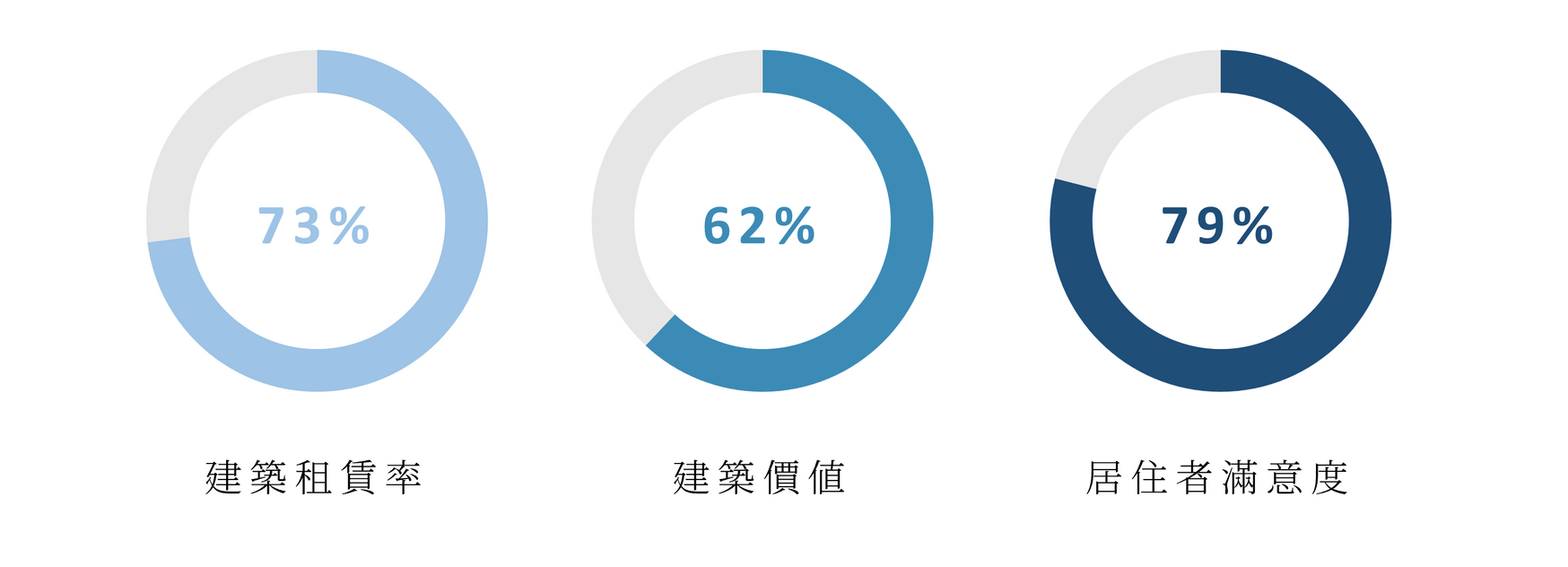
Moving from green buildings to healthy buildings is a process of integrating concern for both the environment and people. The emergence of healthy buildings is not only a revolution in the building sector but also a rethinking of our quality of life. This change is not merely a change of vocabulary; it connects buildings more closely with human needs. Through continual experimentation and innovation, the concept of healthy buildings is being integrated into real-world design, achieving harmonious coexistence between buildings and people and creating living environments that are both green and healthy.
GreenJump has worked in the building sector for nearly a decade and has helped major corporations, architects, architectural firms and developers deliver some 100 projects. Drawing on extensive professional experience in practical innovation, we accurately identify and resolve potential issues and quickly provide incisive, science-based analysis and recommendations tailored to different needs and buildings, ensuring that design solutions are effective and practical and providing valuable support.
Let us look beyond present needs to a promise for the future.
Healthy green buildings do not just build the places we use; they build our future.
Let us join hands to draw a green blueprint for every corner of the Earth, making our tomorrow better and more sustainable. Let everything in our lives be designed with sustainability in mind, and operated sustainably.

