


How Decarbonization Challenges Motivate Companies to Tackle Climate Change
November 2026 Update
This article was first published in April 2024. The following information has since changed:
- The carbon fee is now in effect: the first payments, on 2025 emissions, were made in May 2026, with about 240 companies paying approximately NT$4.97 billion.
- Preferential carbon fee rates are approved based on the Ministry of Environment's designated reduction rates (by industry or by technology benchmark); setting an SBTi target is not in itself a statutory condition for the preferential rate.
- SBTi's current standard requires Scope 1 + 2 targets to align with a 1.5°C pathway; the number of companies with validated targets surpassed 10,000 in January 2026; and the Corporate Net-Zero Standard V2.0 was released in 2026, with validation expected to open in February 2027 and mandatory for all new submissions after January 31, 2028.
For the latest full explanation, see: GHG Inventory, Carbon Footprint and SBTi: Differences, Standards and Taiwan's Latest Rules
The decarbonization challenge has become a reality that companies must face, and how they respond to it is crucial to their future sustainable development. According to the latest survey reports, companies are paying more and more attention to emissions reduction targets, reflecting growing concern about climate change.
With the Ministry of Environment expected to introduce a carbon fee system in 2025, companies face greater pressure to address their carbon emissions. They will face enormous transformation at every level of their value chain, which means they will need to invest in decarbonization over a longer time horizon. At the same time, companies will need to work with suppliers to find decarbonization solutions that are financially viable and achievable. Such collaboration will require companies to take a proactive stance and jointly explore innovative technologies and strategies to achieve their sustainability goals. This will directly affect major emitters in industries such as steel, petrochemicals and cement. To meet this challenge, companies can choose to reduce emissions voluntarily through items designated by the Ministry of Environment or in ways that meet SBTi requirements, in order to qualify for a preferential carbon fee rate.
A Key Tool Leading Companies Toward a Low-Carbon Future
SBTi is currently the most credible emissions target initiative in the world. Jointly founded by international organizations including the World Resources Institute (WRI), the World Wide Fund for Nature (WWF), the UN Global Compact (UNGC) and CDP (formerly the Carbon Disclosure Project), it plays a key role in how companies set emissions reduction targets. Based on the latest climate science, it sets a "carbon budget" for each sector, helping companies use scientific methods to set reduction targets consistent with the Paris Agreement goal of limiting global warming to within 2°C and striving to keep it within 1.5°C. For example, for high-emitting sectors, SBTi requires companies to adopt the Sectoral Decarbonization Approach (SDA) to achieve near-term and net-zero targets, ultimately bringing emissions down to a sustainable level. According to statistics on the SBTi website, as of the end of 2023, 4,204 companies worldwide had received SBTi validation, more than double the 2022 level, reflecting the growing importance that companies around the world place on setting science-based reduction targets.

Helping Companies Create Value and Opportunities from Decarbonization
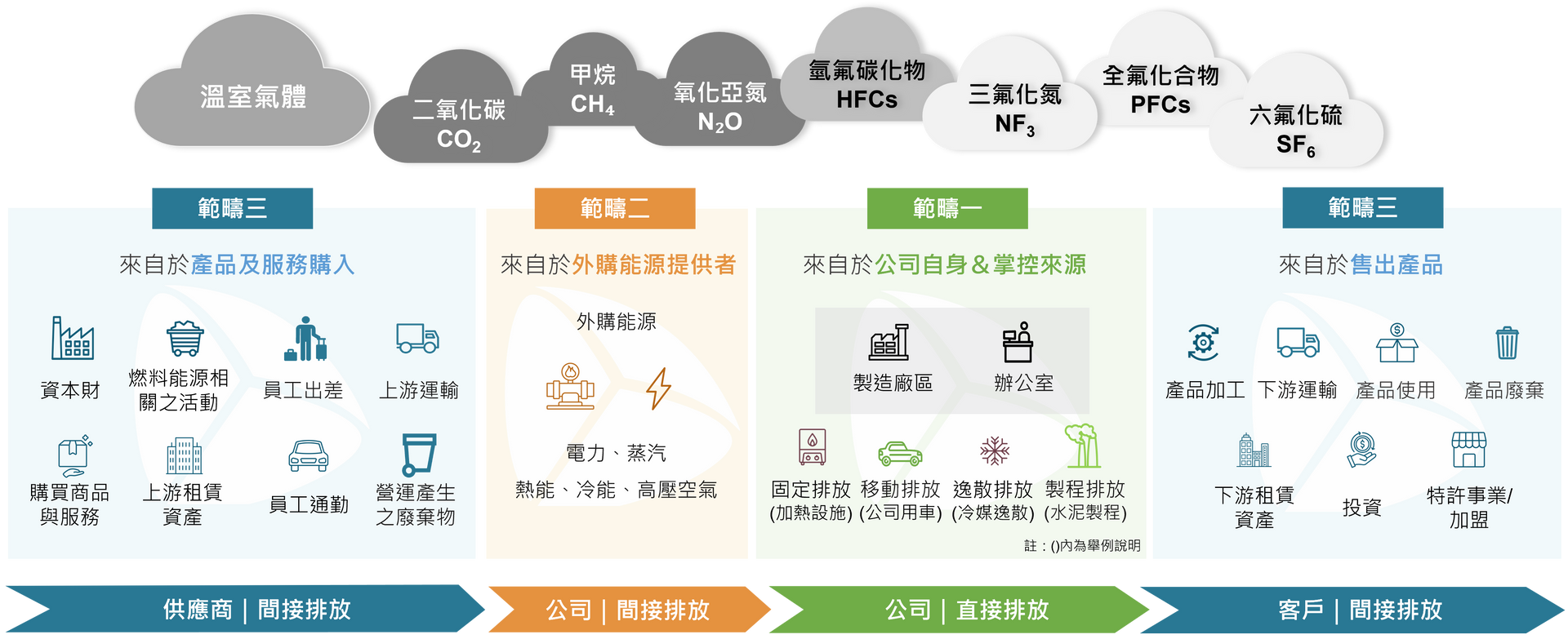
Taking the building industry as an example, life-cycle carbon emissions cover the emissions from manufacturing building materials, from transporting materials to the construction site and from on-site installation, as well as emissions from the energy and resources used during operation, and even emissions from the waste generated when a building reaches the end of its life.
To meet science-based reduction targets, companies not only need to be eligible for SBTi but must first conduct a GHG inventory, take all of their emissions into account, and plan reductions for the target year. The GHG disclosures currently required by the Ministry of Environment and the Financial Supervisory Commission (FSC) cover only direct emissions (Scope 1) and indirect emissions from energy (Scope 2), yet for many companies the main source of emissions is actually other indirect emissions (Scope 3), which are not regulated. Take the carbon footprint of Taiwan High Speed Rail (THSR), a service business, as an example: it covers the greenhouse gas emissions generated across raw material acquisition, service delivery and disposal. That is why, when we help companies conduct GHG inventories, we always discuss the intended use of the results and encourage companies to include Scope 3 in the inventory boundary so that all emission sources are fully calculated. These inventory results will help prepare for a future SBTi application and further highlight the company's sustainability competitiveness and commitment to decarbonization.
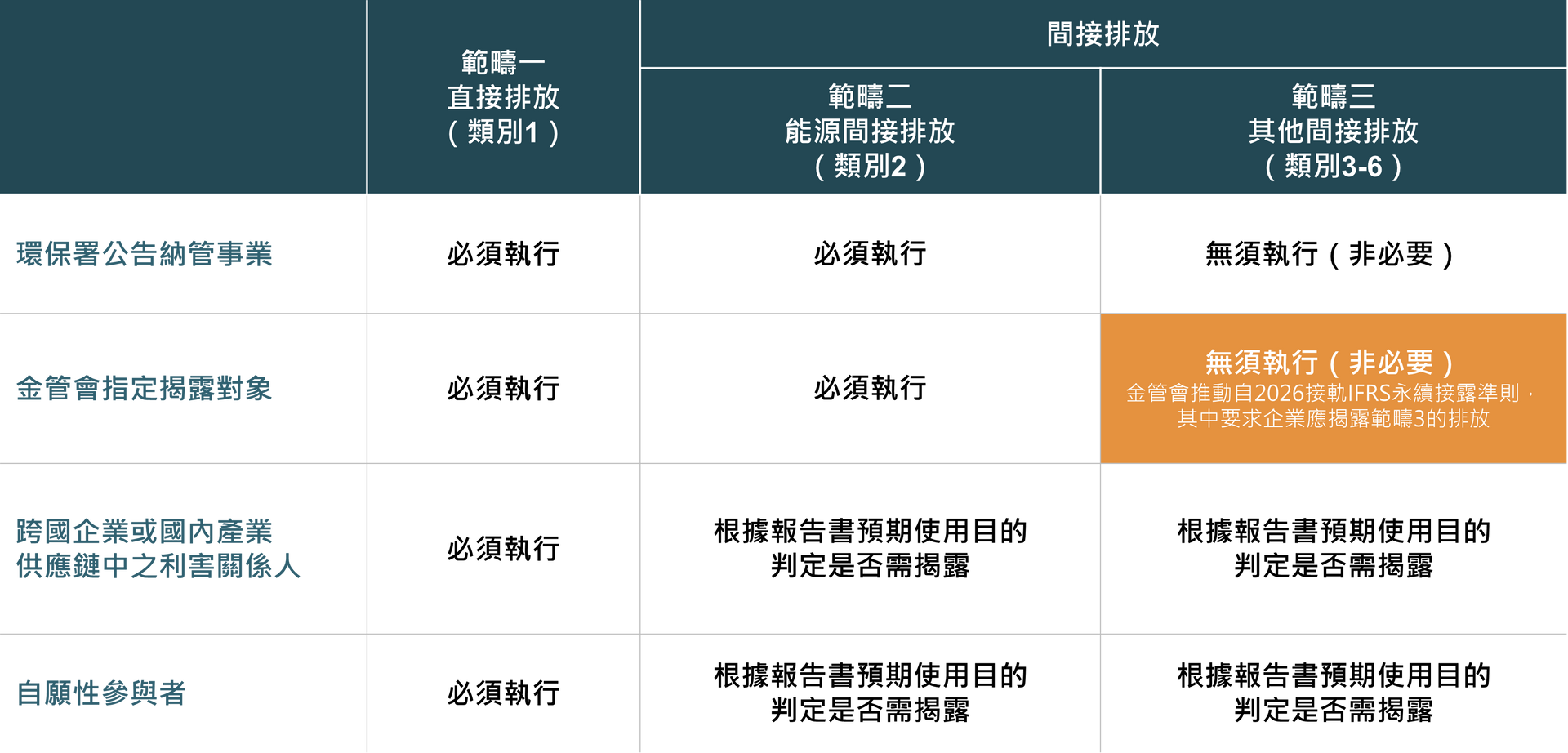
In our experience, taking part in SBTi requires everything from setting targets at the outset and developing strategies that fit the industry's characteristics and the company's future development, to responding to comments frequently, quickly and accurately during the review. The demands on the applicant's experience in decarbonization strategy planning are very high, and the feasibility of the reduction targets also depends on the applicant's expertise in future national policy and energy use trends, so as to provide carbon management services that fit the company's industry.
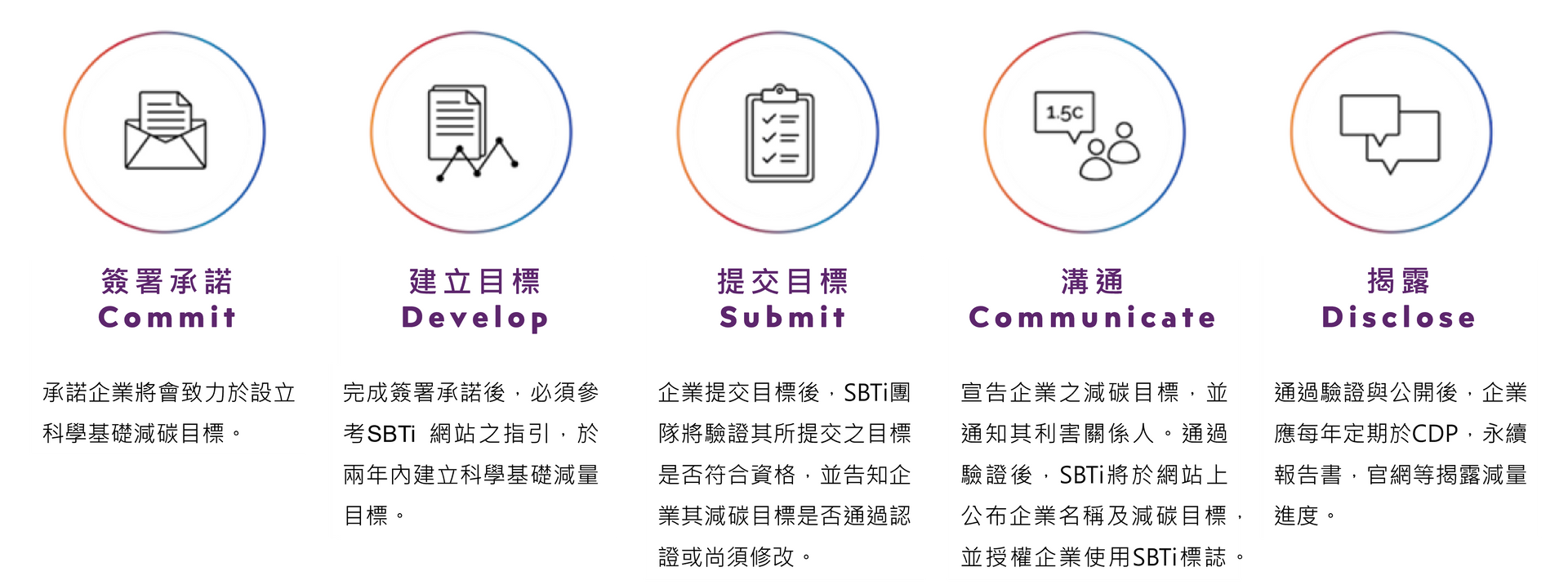
GreenJump has extensive advisory experience spanning 10 industries and 6 countries, bringing together professionals from many fields to help companies realize their vision of sustainable business. We build comprehensive carbon management services for companies, guiding them through inventories under standards such as the Greenhouse Gas Protocol (GHG Protocol) and ISO 14064-1 for organizational greenhouse gas inventories, and helping them pass SBTi validation and set concrete science-based reduction targets. This gives companies a clear pathway to reducing their greenhouse gas emissions, lowers the cost of decarbonization, and enables their low-carbon transition.
Need Help with GHG Inventories and Carbon Management?
GreenJump provides organizational GHG inventories, product carbon footprints, SBTi target setting, decarbonization pathway planning, and TNFD natural capital assessments.

