When Sustainability Becomes the Baseline: A Juror's Reflections on the 2026 Taipei Urban Design Award
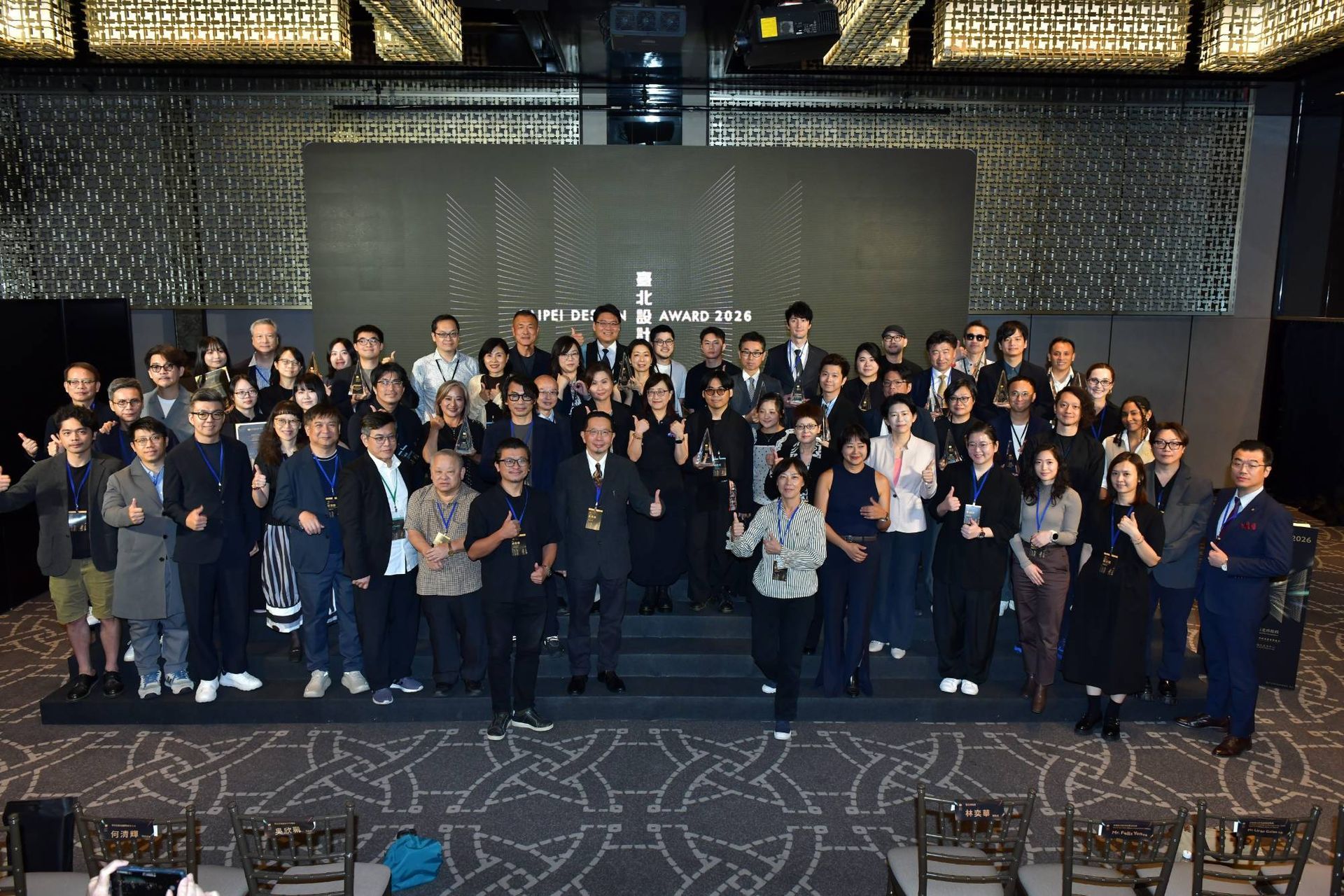
On the evening of October 29, the 2026 Taipei Design Award ceremony was held at the Regent Taipei. When the news came that "Huanggang Creek Restoration" had won the Grand Prize, I was organizing my judging notes from the better part of the year. From 86 entries in the online preliminary round in early summer, through one site visit after another under the midsummer sun, to the final round and the announcement, one reflection outweighed all the others at the end of this judging journey: sustainability is no longer extra credit in Taiwanese design; it has become a baseline requirement.
Sustainability Has Moved From the Last Slide Into the Structure Itself
Having worked as a sustainable design consultant for nearly twenty years, I know well how the place of the word "sustainability" in presentations has shifted. Ten years ago, it mostly appeared on the last slide, a nice line in the conclusion. Five years ago, it began to get a section of its own, but the content was often just a few pictures of green building labels. This year, in the entries to the Taipei Urban Design Award, sustainability was written into the structure itself: cold-mix recycled asphalt paved on Shida Road; certified timber construction and reused steel that cut the embodied carbon of a social welfare complex beneath an elevated viaduct by more than 20%; recycled PET bottles 3D-printed into walls, oyster shells turned into flooring and mycelium turned into acoustic panels; and a temporary installation on the plaza of the Taipei Fine Arts Museum that told you, with full confidence, that Taiwan's steel recycling rate is 90% and that it used steel because steel can go back into the loop. These are not declarations; they are construction methods, material schedules and numbers that can be laid out and verified.
Returning Land to the River: The Grand Prize's Paradigm Shift
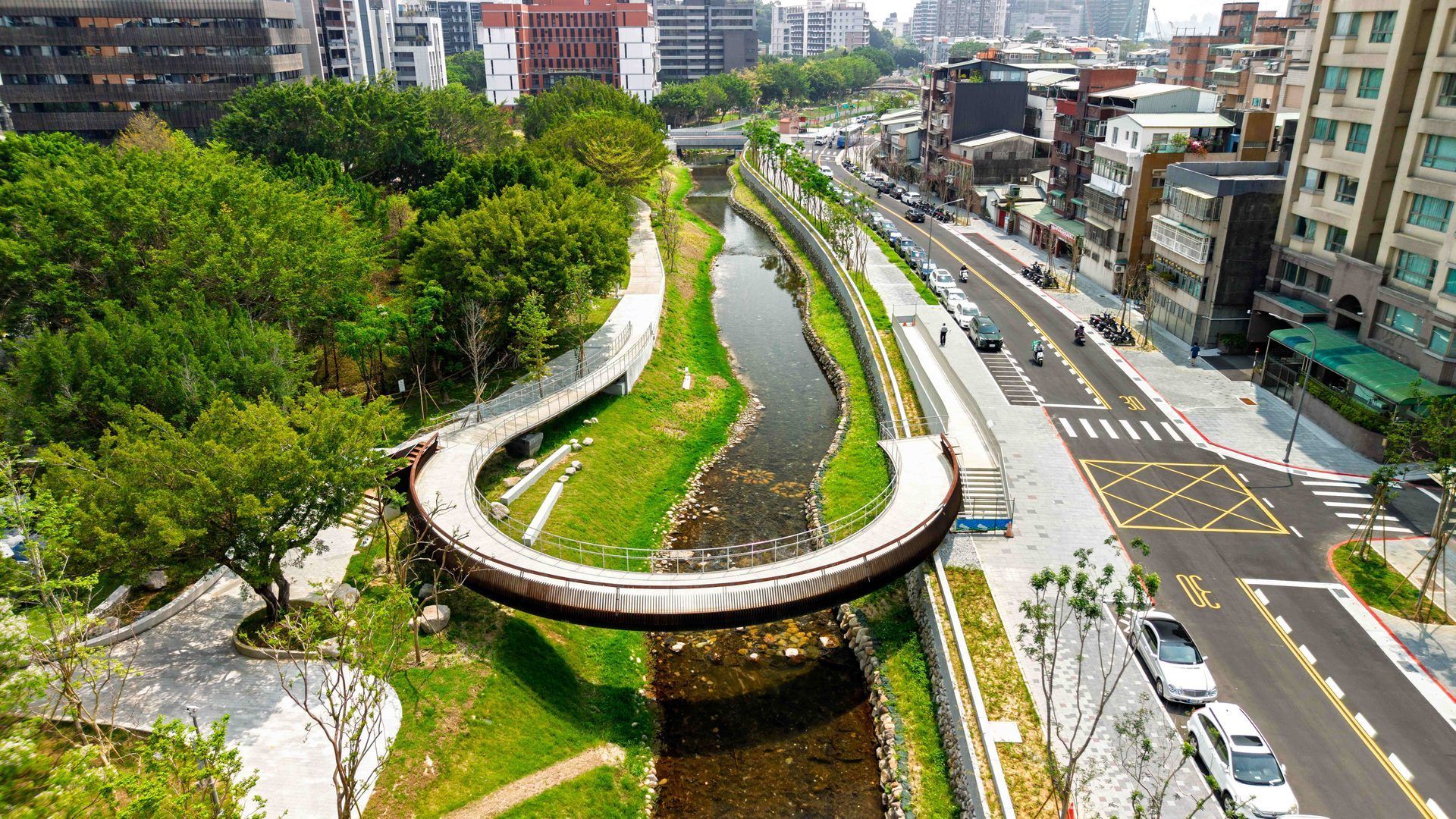
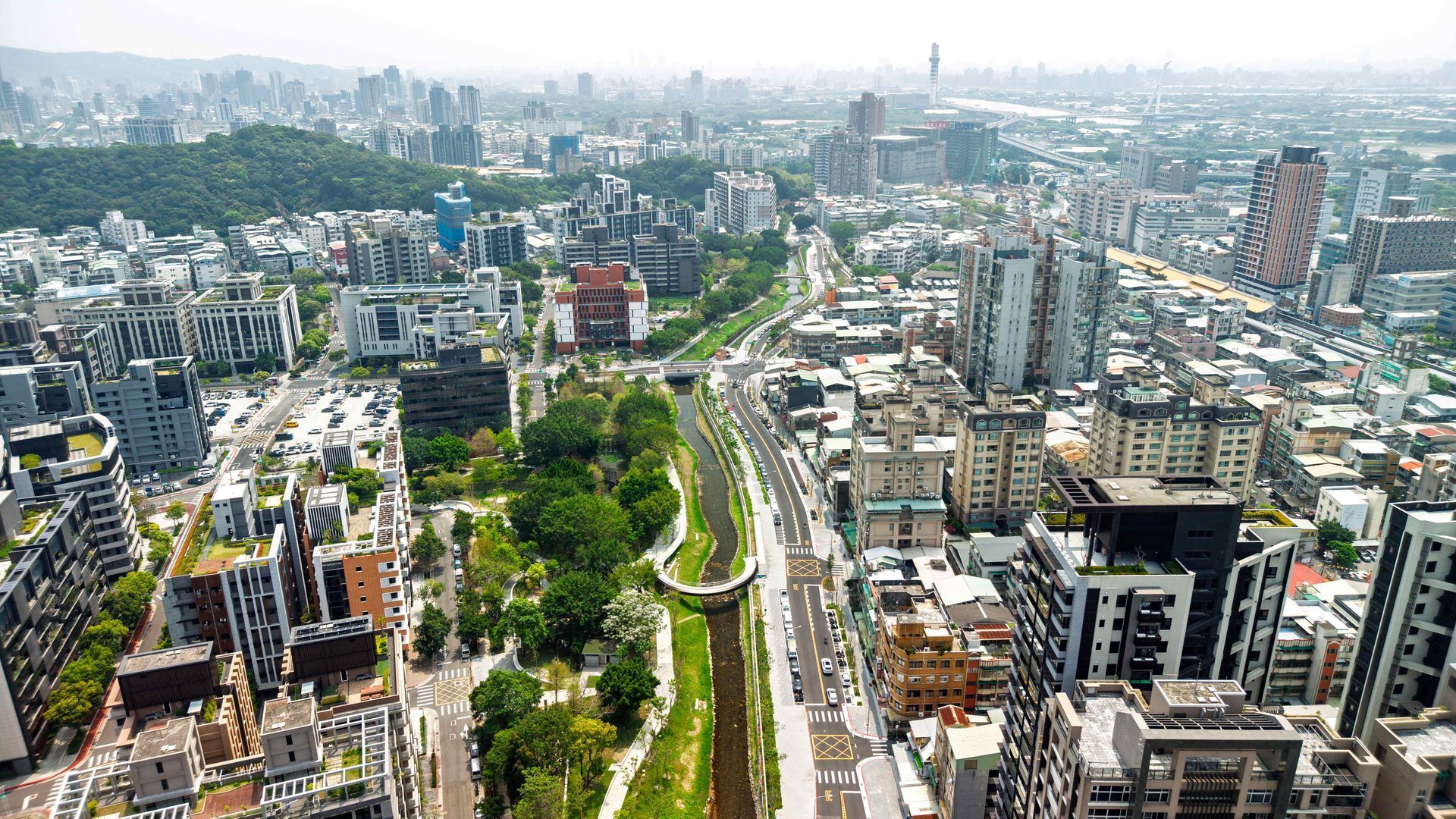
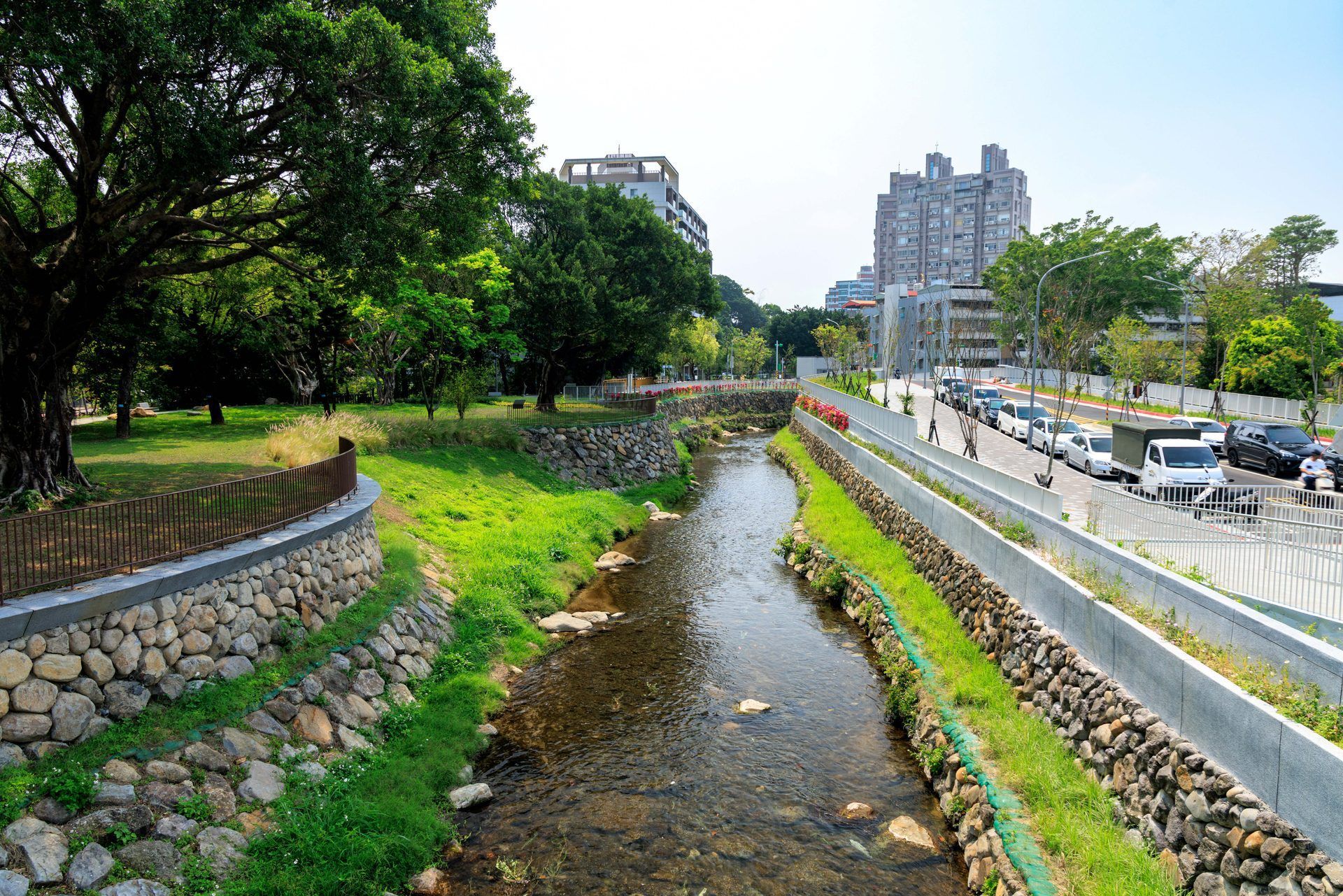
The Grand Prize winner, "Huanggang Creek Restoration," is the most complete embodiment of this shift. The project's real breakthrough lies not in engineering but in policy: for the first time in Taiwan, an urban plan amendment was used to "return land to the river," bringing the park into water body planning and enlarging the flood conveyance cross-section, which yielded about 7,500 m³ of flood storage capacity and a 50-year return period protection standard. Flood control no longer means raising the levees a little higher, but giving some space back to the water: a paradigm shift in governance thinking. During my site visit in late August, I stood beside Huanggang Creek watching the ecological embankments interweave with pedestrian routes, and it left a deep impression on me: this is not a river that has been tamed, but a river that has been invited back into the city.
Water, Citizens, Equity: The Subject of Sustainability Is Expanding
The gold, silver and bronze winners of the Urban Design Award are even more interesting viewed together. The gold winner, "From Hidden Waterways to a Climate-Resilient Campus," turned Minzu Experimental High School into blue-green infrastructure for flood detention, rainwater harvesting and community sharing. The silver winner, "Wufengang Creek Most Beautiful River Action," followed 12 citizens from a river patrol team and participatory budgeting all the way to certification as a conservation and coexistence site, using nature-based solutions to cut greenhouse gas emissions from rice paddies by nearly 50%. The bronze winner, "Jingfeng Zone 1 Social Housing," used an L-shaped single-loaded corridor so that all 90 households can see the mountains. Water, citizens, equity: behind these three keywords lies the same thing. The subject of sustainability is expanding from government and professionals to every citizen. A river can begin to be protected by 12 people, a school can detain floodwater for an entire neighborhood, and a social housing building can share the view equally with every household. This is what is most moving about urban design.
Real Sustainability Is Backed by Numbers and Stands Up to Follow-Up
Of course, as a juror, I also left reminders on every evaluation form. The more widespread sustainability claims become, the more they need to be scrutinized: carbon reduction figures should be checked retrospectively against actual procurement and construction data; the circularity claims of temporary installations depend on where the materials actually go after dismantling; claims that a lighting environment is ecologically friendly need measured illuminance; and blue-green facilities should have ten years of maintenance responsibilities and budgets spelled out before completion. Sustainability that is backed by numbers and stands up to follow-up is real sustainability; otherwise, even the most eloquent narrative is just another form of decoration. Likewise, sustainability needs to learn to sustain itself. This year, some entries used their operating track record to prove that sustainable spaces can generate their own content, foot traffic and business models, an important example for a public design community accustomed to relying on subsidies.
Making Sustainability an Everyday Language
This year's Taipei Design Award drew 4,825 entries from 64 countries and regions, and the Taipei Urban Design Award has always been its most "Taipei" category: it judges not concepts, but real changes that have already taken place on streets, along riverbanks and on campuses. The role of juror will one day be handed on, but as someone who practices sustainable design in this city, I am glad to see Taipei turning sustainability into an everyday language: not slogans, but the mix design of asphalt, the provenance of steel, the cross-section of a river, and 90 windows facing the mountains.
(The author is a juror of the 2026 Taipei Design Award – Taipei Urban Design Award)