


How Does WELL Healthy Building Align with ESG? The Key Solution from Employee Well-Being to Corporate Social Responsibility
"The core question of ESG is no longer just how companies cut carbon, but how companies treat people."
In the past, investors focused on whether a company belonged to a green industry and whether it had a net-zero strategy. Today, the market is asking a further question: does the company truly care for the physical and mental health of its employees, contractors and supply chain partners? As ESG becomes the common language of global capital markets, the social dimension (S) is shifting from an abstract idea into concrete action that must be quantified, verified and disclosed.
Why Is ESG Starting to Focus on Health?
Looking at international trends, companies that fall short on ethics, employee well-being and disclosure will increasingly be identified by the market, and this will be reflected in their valuations and investment risk. In Taiwan, companies with paid-in capital of NT$2 billion or more have been required to prepare sustainability reports since 2023, and all TWSE/TPEx-listed companies since 2025, so ESG is no longer a bonus but a baseline requirement. Within ESG, the social dimension (S) is the hardest to explain clearly, yet the one investors are most likely to magnify.
What Does the ESG Social Dimension (S) Mean for the Building Industry?
For the building and real estate industry, the social dimension of ESG is not only about systems or policies; it is directly reflected in whether spaces support health, reduce risk and improve people's quality of life. In Taiwan, the "S" tools that relate directly to buildings and have real impact fall into three main categories:
- Baseline compliance and safety
For example, the ISO 45001 occupational health and safety management system safeguards workers' rights and site safety during development and construction, laying the foundation of corporate social responsibility. - Data disclosure and communication
Disclosing employee well-being data under the GRI Standards, or using SROI (social return on investment) to monetize a building's contribution to the community, makes social impact more comparable. - Spatial incentives and behavioral guidance
For example, the Fitwel healthy building certification emphasizes site selection and guiding everyday behavior. Because it is highly flexible and has a relatively low entry threshold, it has been widely adopted in the transformation of existing buildings in Taiwan.
However, to truly return to the core value of putting people first, and to provide a verification standard with a scientific basis and international credibility, WELL healthy building certification has always held the most central strategic position.
WELL: Turning Health Investment into Quantifiable ESG Value
The International WELL Building Institute (IWBI) has stated clearly through its Asia ESG task force that its goal is to "translate corporate investment in health into value that is quantifiable and can be incorporated into ESG scoring systems." This also means that WELL is not just a building certification but one of the few tools in the ESG social dimension that international rating agencies can understand and trust. Rather than focusing only on energy efficiency, WELL focuses on how buildings "care for their occupants," making it the building standard that best embodies depth in the "S" anywhere in the world today.
Why Pursue WELL Certification?
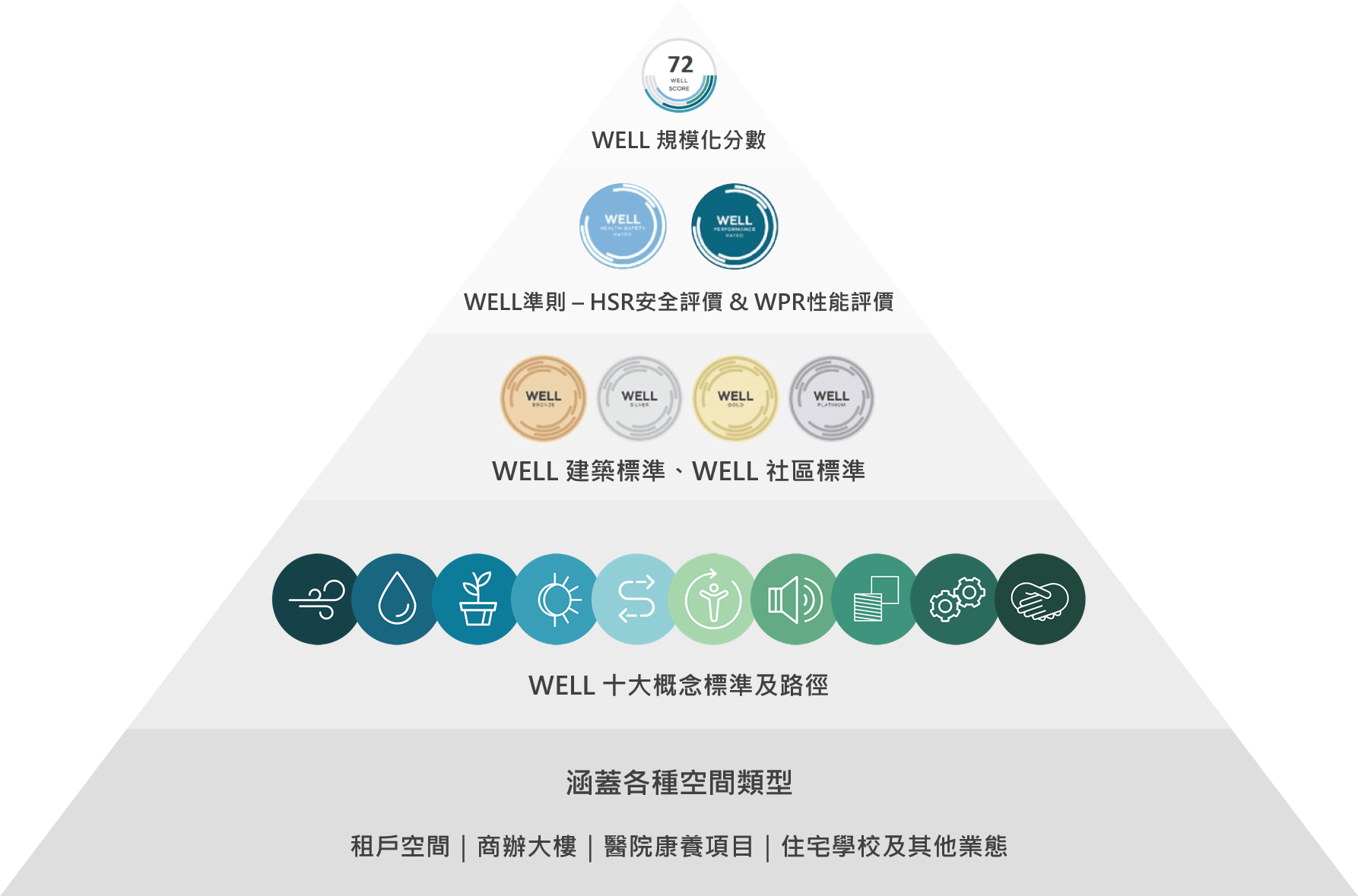
WELL is currently one of the most credible healthy building standards internationally. It maps in both directions to the United Nations Sustainable Development Goals (SDGs) and can be benchmarked against mainstream ESG frameworks such as GRI and GRESB. In its ESG reports since 2020, Goldman Sachs has regarded WELL as an important tool for improving employee wellness. The ten WELL concepts (Air, Water, Nourishment, Light, Movement, Thermal Comfort, Sound, Materials, Mind and Community) make it easy to see how closely WELL aligns with "employee well-being" in ESG social responsibility. Starting from body, mind and spirit, WELL comprehensively addresses the health needs of the largest group of building users.

How WELL Is Put into Practice in Real Estate
In physical design, WELL looks not only at air, water and light but also emphasizes "how design shapes behavior." For example, N12 Food Production encourages edible gardens; research shows that growing your own fruit and vegetables helps build healthier eating habits. Another feature common in offices, M07 Restorative Spaces, provides private, biophilic non-work areas that support meditation and relaxation. Studies have confirmed that meditation can effectively reduce work stress, anxiety and fatigue, and improve sleep quality.
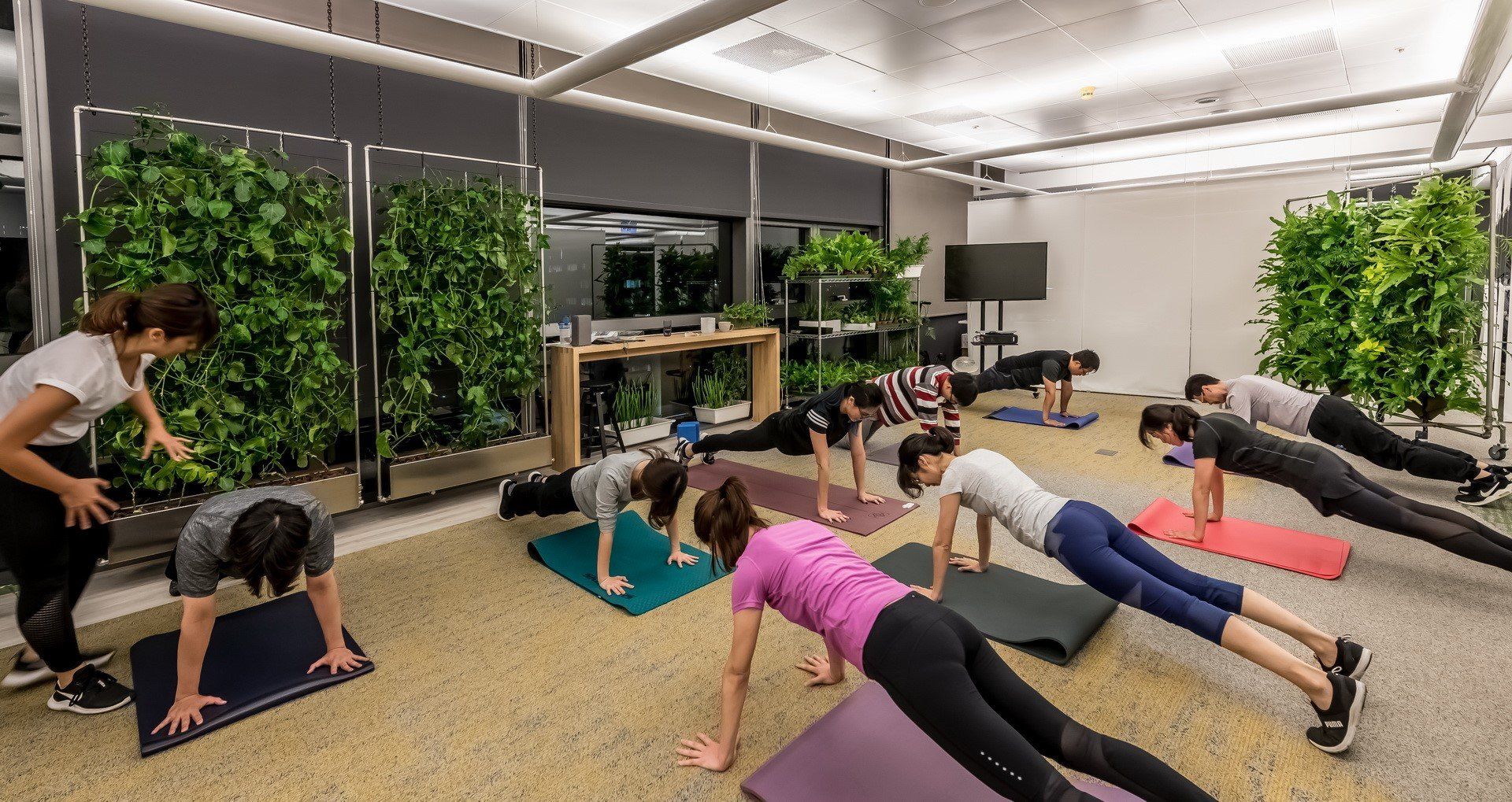
In terms of systems and policies, WELL benchmarks extensively against GRI's social indicators. For example, under the Mind concept, M03 Mental Health Services explicitly requires companies to provide mental health screening and support policies, while M05 Stress Support requires companies to actually review indicators such as leave, overtime and staff turnover. Under the Community concept, C06 Health Services and Benefits requires companies to provide comprehensive health benefits that go beyond legal requirements, while C08 to C10 focus on parental leave, flexible working hours, and support for breastfeeding and childcare, creating a family-friendly workplace.
WELL at Scale: From a Single Building to an Enterprise-Level ESG Strategy
As WELL has expanded from a single-building standard to communities (the WELL Community Standard), and then further into the company-focused WELL at Scale program, health has formally become an enterprise-level ESG strategy tool.

Built around the ten WELL concepts, the program allows companies to plan a healthy building pathway tailored to their own asset portfolio, progressively improve overall health performance through annual targets and budget allocation, and ultimately obtain an internationally recognized WELL Score, an ESG real estate score.
Toward Housing Justice and Health: The New WFR Trend
As ESG continues to evolve, the focus of healthy buildings is extending from offices to living spaces. WFR (WELL for Residential) has become an important direction for the building industry since 2024. WFR brings health metrics previously applied to commercial offices into housing, covering air quality, water safety and mental health at home. In Taiwan, as public attention to housing quality and housing justice grows, WFR will become an important tool for developers to demonstrate their ESG commitment and respond to social equity.
GreenJump's Perspective
GreenJump believes that the path from WELL in offices to WFR in homes clearly outlines the ultimate goal of buildings in the ESG social dimension: making health no longer just a benefit, but a fundamental right that is institutionalized, measured and protected.
When companies are willing to answer the question of "how to treat people" in substance, through space, systems and culture, health is no longer just a cost but the social capital with the greatest long-term value.

