


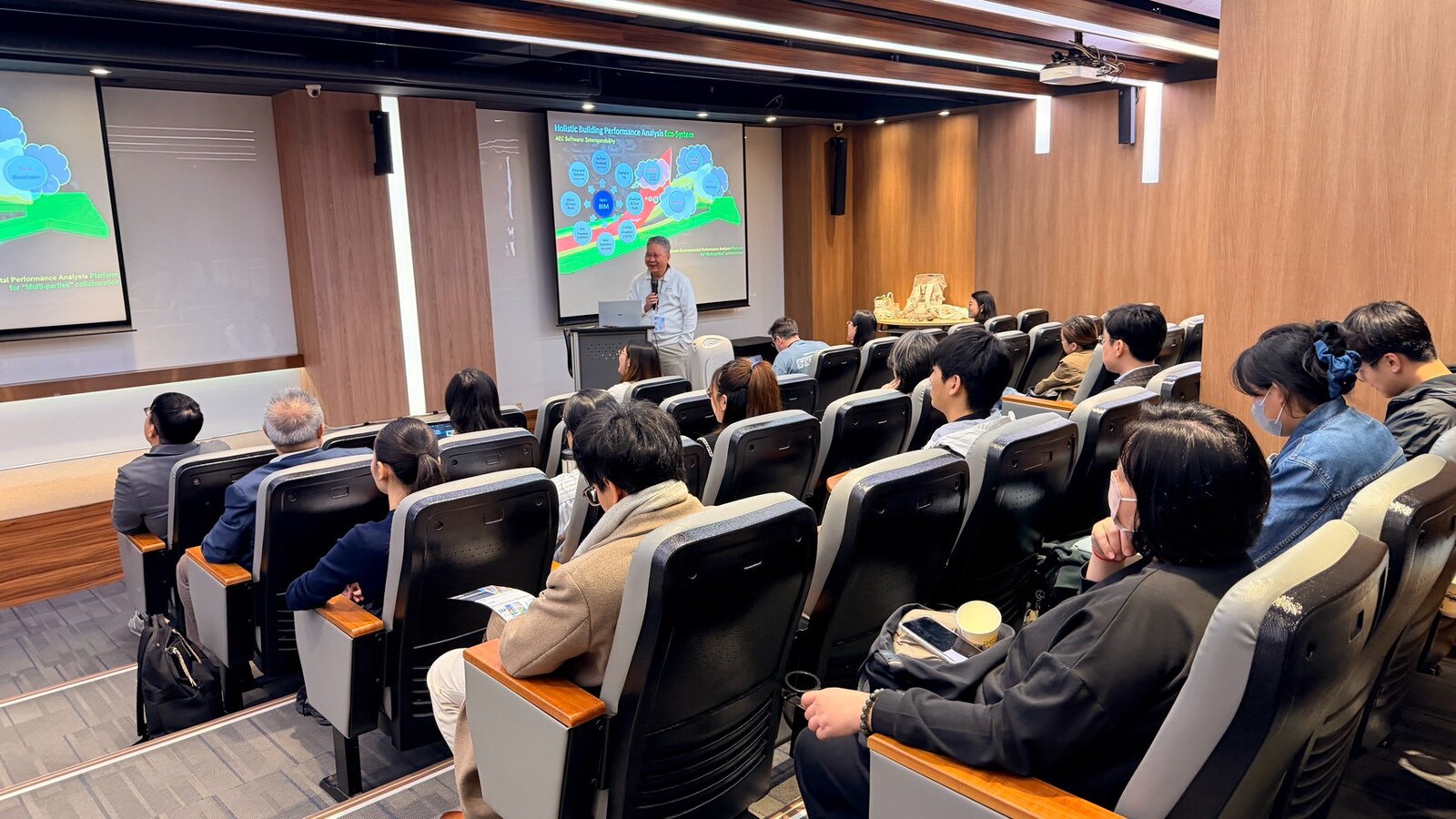
The Future of Building Simulation Is Here | 2026 Building Simulation Exchange Recap
Thomas Tian (Berlin, Germany)
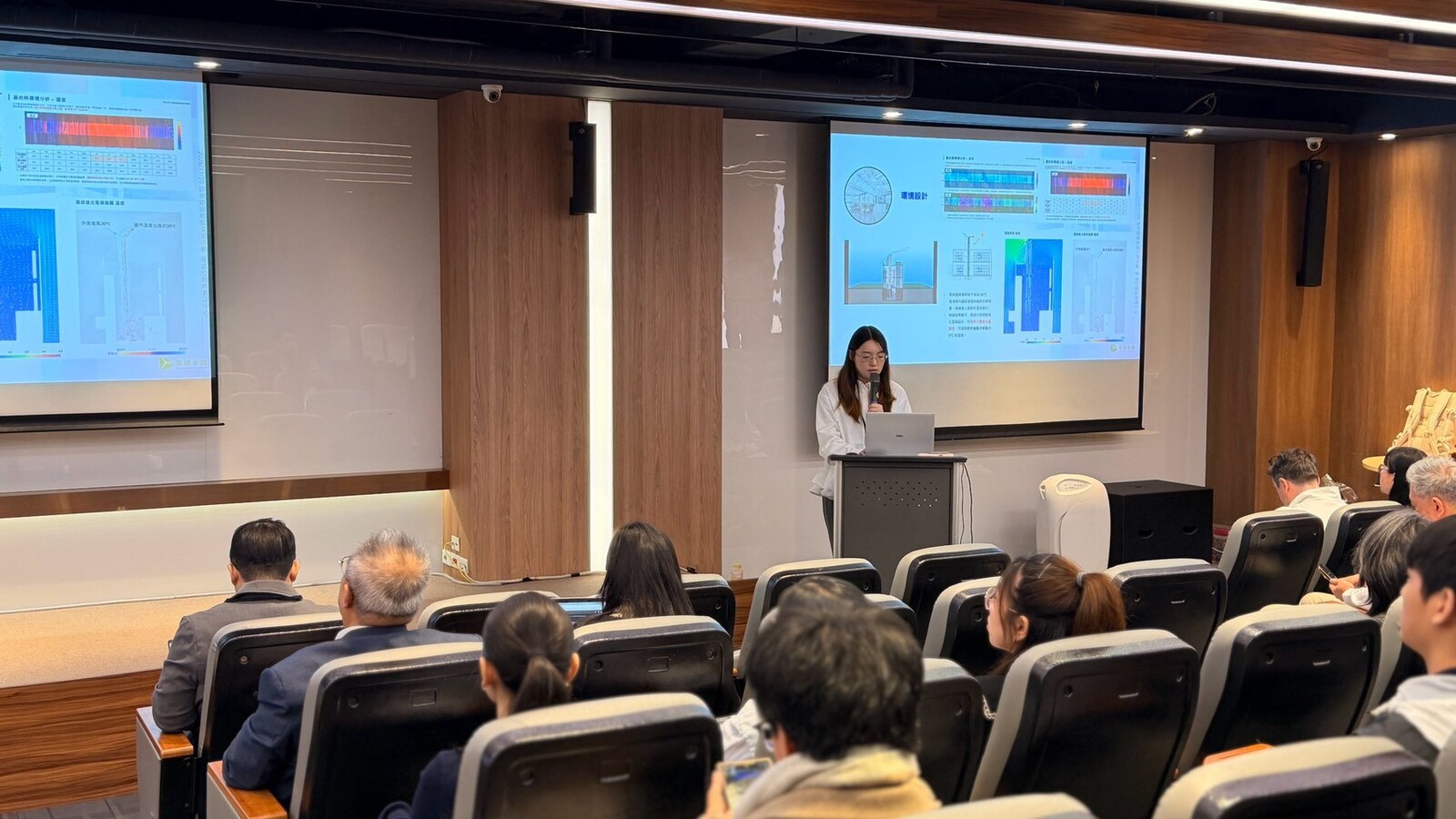
Hsien Lee, Head of Building Environment Simulation at GreenJump Sustainability
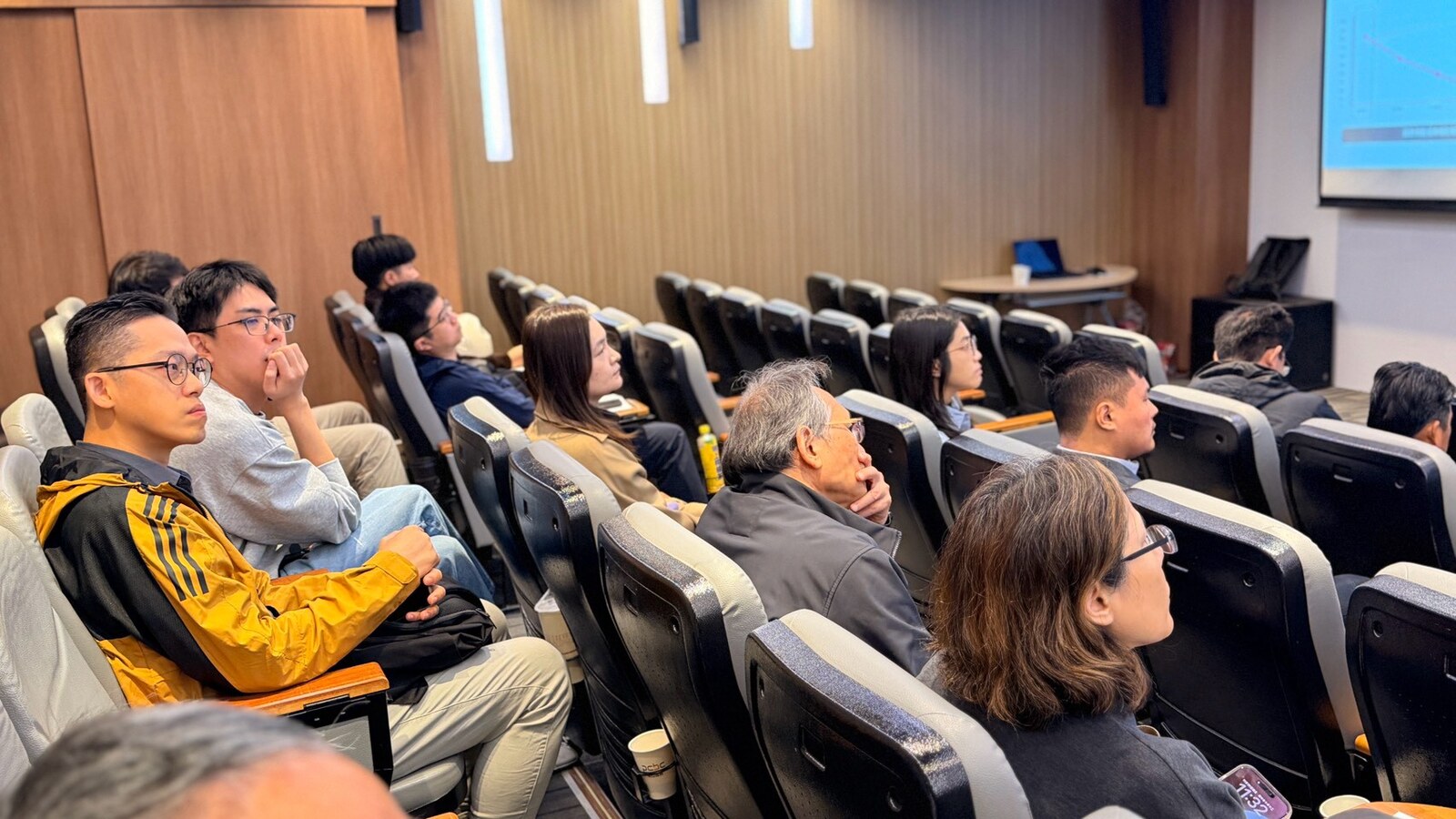
[Taipei, November 20, 2026] The 2026 Building Simulation Exchange took place this morning at the Ben-Ya Conference Center under the theme "The Future of Building Simulation Is Here: AI-Assisted Building Performance Simulation and Practical Applications." Dr. Alex Lee (Singapore) and Thomas Tian (Berlin, Germany) of Tian Building Engineering travelled to Taiwan to launch FlowSIM Pro, a CFD airflow and thermal comfort analysis tool, for the first time in Taiwan. Hsien Lee, Head of Building Environment Simulation at GreenJump Sustainability, shared a consultant's view of how simulation feeds into design decisions. Attendees could also join GreenJump's official LINE account to ask questions live.
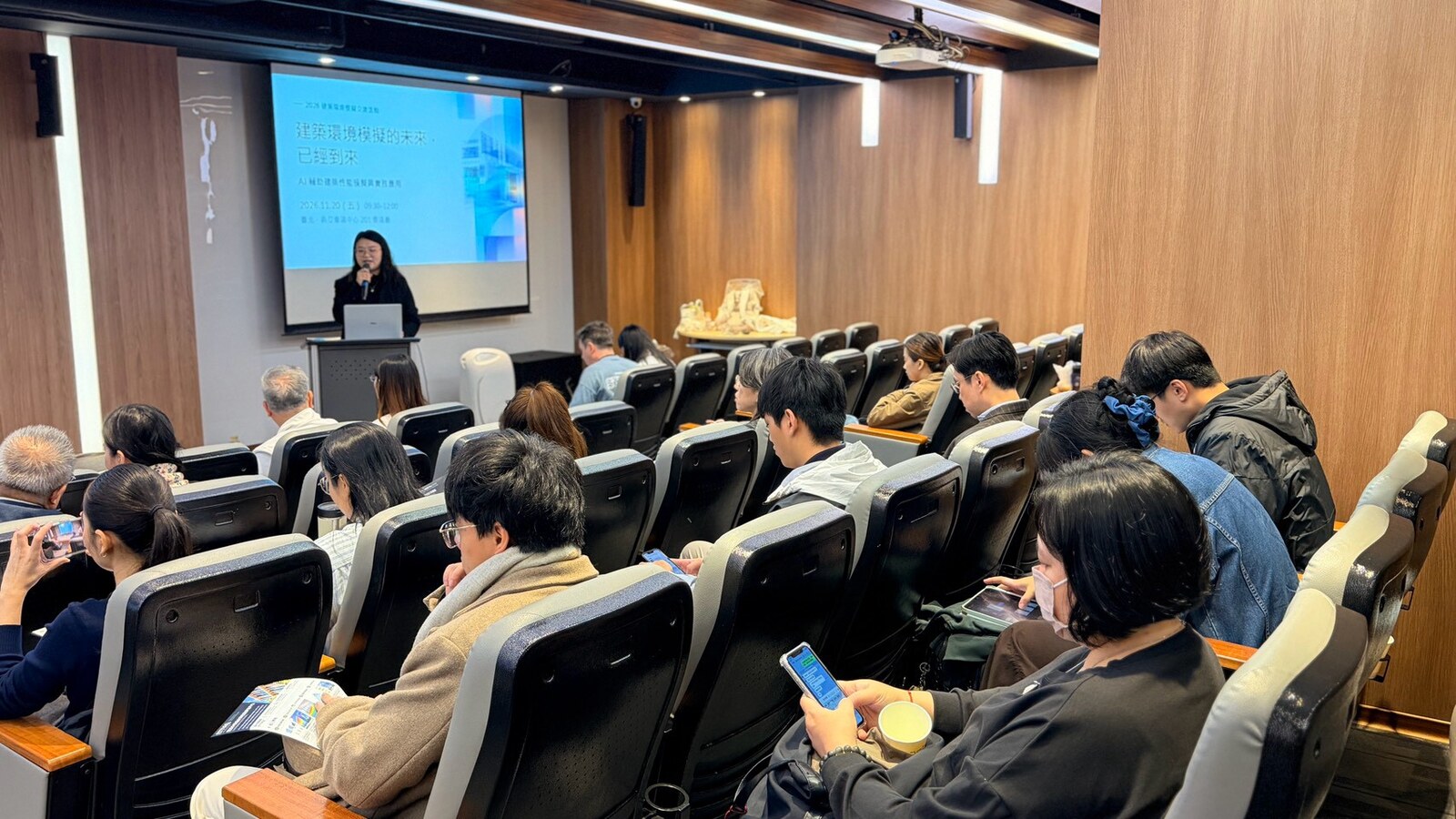
Dr. Alex Lee: The gap he saw 13 years ago is still the point today
Trained in fluid dynamics, Dr. Alex Lee began developing building simulation software in 2013. He recalled what he saw at the time: the building industry needed CFD, but the available tools carried high licensing fees and a steep learning curve, putting them out of reach for many small and mid-sized design teams, whose projects were often held back by time and cost. From the start, his team chose open-source engines (OpenFOAM for CFD, Radiance for daylighting) combined with an Open BIM workflow, and committed to "what you see is what you get": an architect's design should not have to be heavily simplified by an analyst just so the software can run it.
He also shared his connection with Taiwan. In 2019 he flew in from Singapore for a BIM conference and met the GreenJump team for the first time; a year later, he ran his first training session at GreenJump's office. In Singapore, he trains more than a hundred university and polytechnic students and working engineers every year.
One of his recent studies looks at Singapore's traditional long, narrow shophouses. These buildings stay relatively cool inside without air conditioning, and simulation helps explain the ventilation and thermal principles behind that.
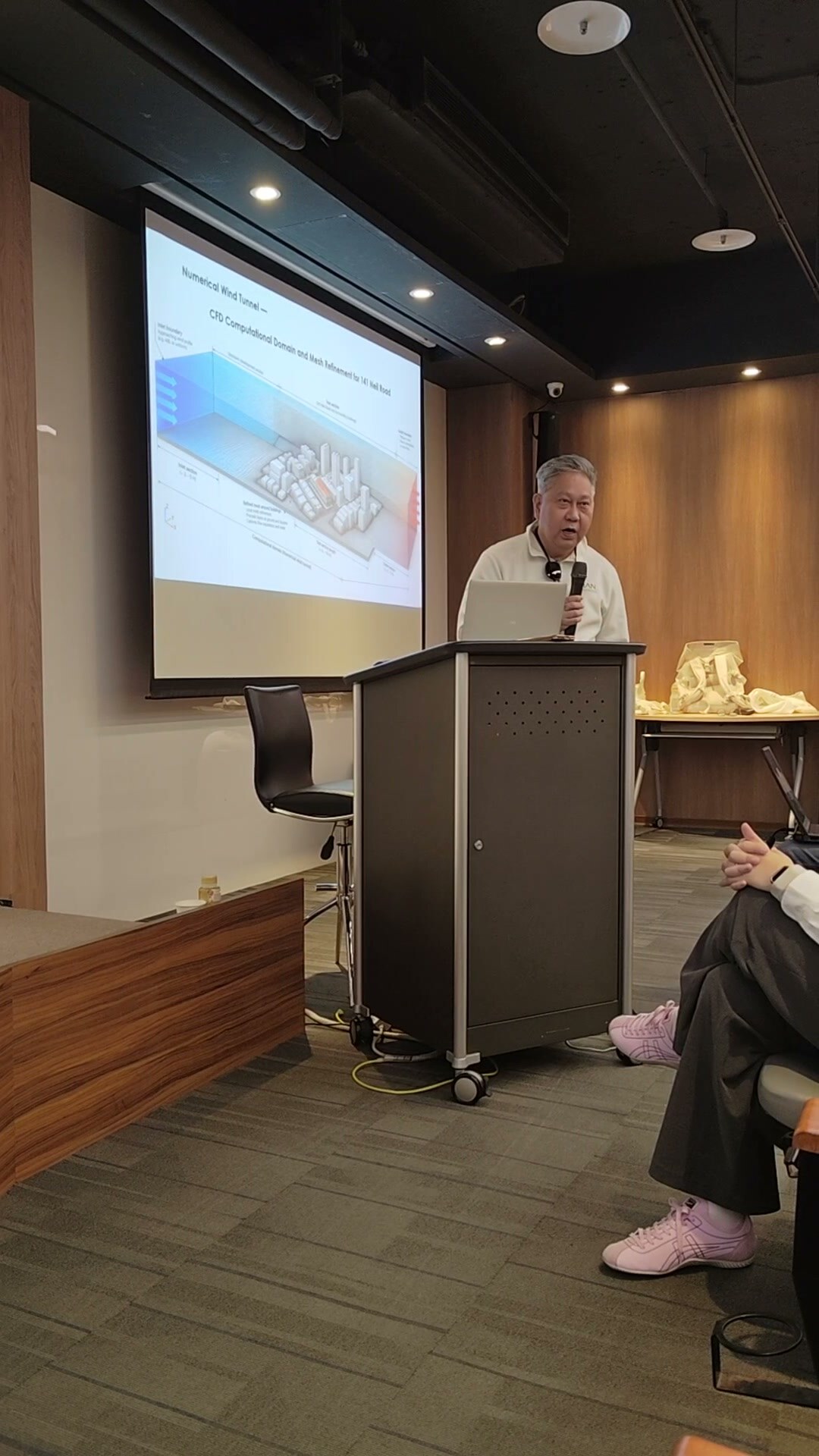
On AI, his position was clear: AI is fast and produces beautiful images, but without a grounding in fluid dynamics it is easy to be fooled by results that only look plausible. That is why FlowSIM Pro uses AI to make the software easier to use, while the calculations themselves remain built on rigorous numerical methods.
Dr. Alex Lee
Thomas Tian: Complex Buildings. Simple Simulation.
Thomas Tian gave live demonstrations of FlowSIM Pro and ETTViQ, along with Tian Building Engineering's overall framework for integrated building performance analysis.
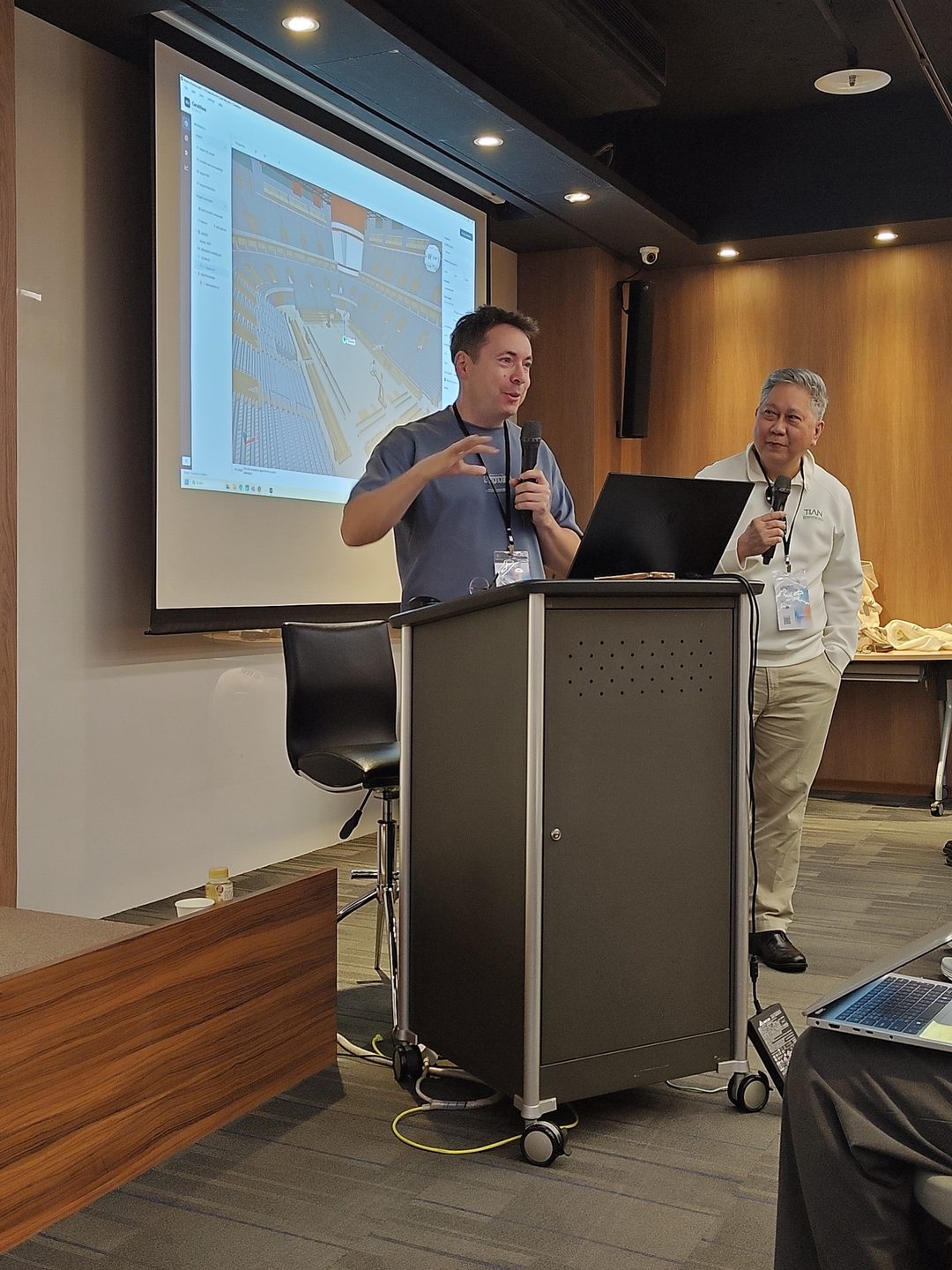
FlowSIM Pro (Taiwan debut)
dedicated to CFD airflow and thermal comfort analysis (air speed, temperature, PMV/PPD). It works directly with Revit, IFC, Rhino and SketchUp models and includes a built-in offline AI assistant that helps set up and check simulations in natural language. Beyond OpenFOAM, support for other methods such as LBM, FDS and FFD is planned
ETTViQ
facade and shading option comparison, integrating Radiance daylighting and EnergyPlus heating and cooling load analysis, with 3D solar radiation analysis
For architects, this means questions that used to go to a specialist analyst, and take weeks of back-and-forth, can be seen much earlier, right at the design table.
Hsien Lee: From simulation analysis to design decisions
Hsien Lee, Head of Building Environment Simulation at GreenJump Sustainability, opened with one observation: clients rarely come to us because they "want a simulation." They come with a question: will this design cause problems, can it pass the review, which improvement should we do first?
She placed simulation back into the design process:
- Competition / planningexplore the possibilities of massing, site wind and sunlight
- Schematic designcompare openings, shading and thermal comfort options
- Urban design reviewprepare verifiable conditions and evaluation criteria
- Detailed designconfirm local performance, such as plant rooms and basement equipment layouts
The earlier simulation comes in, the more it can shape the design.
As the Royal Academy of Engineering puts it, by the time a building's design has been sketched out, the major opportunities to save energy have either been captured or lost for good.
Her case studies covered outdoor-unit heat rejection and ventilation in a narrow alley, a comparison of ceiling fan and roof insulation strategies for a factory, and energy analysis that moves from "meeting the code" to "comparing options." She also explained how the same method extends to airflow and heat dissipation in data centers and server rooms.
She closed with five things a trustworthy simulation result must get right:
Problem definition
which design question are we helping the client answer?
Reasonable conditions
are the weather data, model, boundaries and input assumptions consistent?
Evaluation basis
is the judgment based on code requirements, comfort, or a comparison baseline?
Actionable recommendations
which design change does the result point to?
Communicating results
who will use the results, and how do we make them understandable?
To finish, she gave a live demonstration of GreenJump's CyberSense 3D results platform. Using GreenJump's own office (GJ Office) as the example, attendees scanned a QR code on their phones and switched between layers such as pedestrian-level wind, sectional wind flow and solar heat radiation in 3D.
Three recommendations for design and development teams
Schedule simulation while decisions can still be made
looking at wind, light and heat during the competition and massing stages saves far more than the cost of the analysis compared with adding it at the construction drawing stage
Choose the right level of detail for each stage
look at trends early and details later; there is no need to build the most detailed model from day one
Ask for simulation results that include conditions and recommendations
a good report needs more than colorful images; it should state its assumptions, the comparison baseline, and what to change next
Good simulation does more than produce results; it shows the design team what to do next.
Our thanks to Dr. Alex Lee and Thomas Tian of Tian Building Engineering for travelling so far, and to every architect, MEP and HVAC engineer and development team who joined us. To learn how building environment simulation can support your project, contact GreenJump on LINE: Chat with GreenJump on LINE
Further reading
Photos: GreenJump Sustainability

