From Low-Carbon Practice to Sustainable Building: Chenyeh Chemical Works' Green Building Journey, an Interview with President Pan Wei-hao
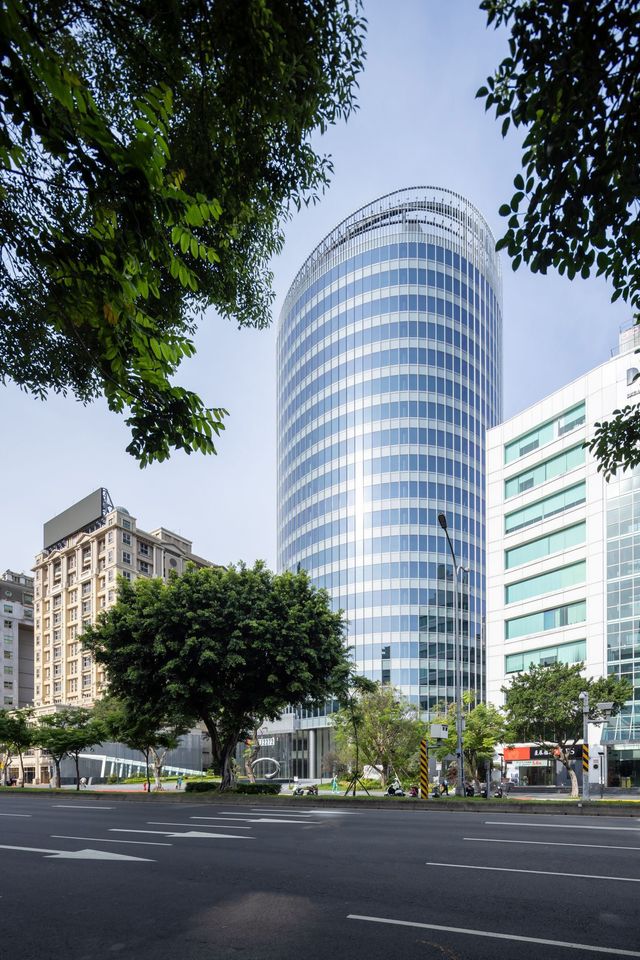
As the world focuses more and more on net-zero targets, using innovative technology to advance sustainable building has become a priority for companies. CAAM Chengde 168, developed by Chenyeh Chemical Works, is the first green office building in Taiwan to achieve LEED v4 CS Platinum certification, and the experience of Pan Wei-hao, President of Chenyeh Chemical Works, offers deep insight. He shares how reducing embodied carbon was the top carbon-reduction goal at the start of construction, and how, once the building entered operation, smart building technology and integrated data systems are being used to reduce operational carbon.
Source: Taiwan Architecture (台灣建築), Vol.352, January 2025
Interviewee: Pan Wei-hao (潘唯浩), President, Chenyeh Chemical Works
Interview and text: Tien Ko-liang (田可亮)
Images: Tien Ko-liang, Chenyeh Chemical Works, Yuan Chuang Architects
Public relations coordination: Whale Sustainability Marketing Consulting (鯨永續行銷顧問)


The article
A pioneer in sustainable building
According to recent reports, the building sector accounts for more than a third (37%) of global carbon dioxide emissions. Pan shares the deep, multi-step reviews he carried out with the architect, the sustainability and green building consultant, suppliers and other partners as they actively worked to reduce embodied carbon.
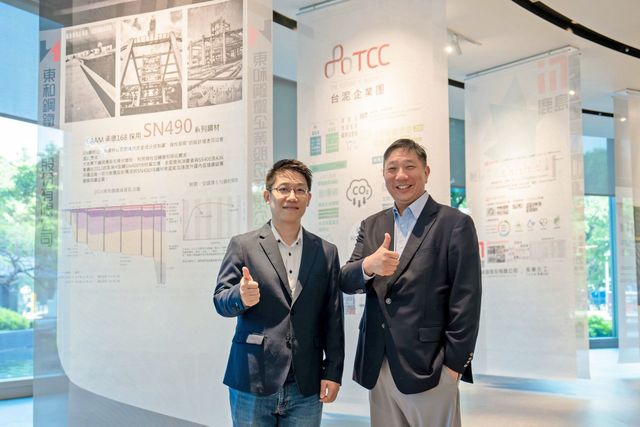
"To reduce embodied carbon, we first need to cut the total amount of high-carbon materials. For a building of the same size, switching from a reinforced concrete structure to a steel structure cut 11,400 m³ of concrete, although it also added 2,700 tonnes of steel." Pan recalls why he decided to work with TCC (Taiwan Cement) and Tung Ho Steel. At the time there was no cement brand on the market clearly labeled as low-carbon. He asked TCC to calculate carbon emissions based on its actual mix and shipment data, and the results showed that TCC's mix cut about 4,000 tonnes of carbon emissions compared with ordinary cement (Portland Type I). Tung Ho Steel was chosen because it uses Scrap-EAF technology, which not only has low emissions but also uses recycled scrap metal. Pan also praises Tung Ho Steel for dropping, since 2012, the surcharge on SN400YB H-beams, offering customers SN400YB steel at the same price as SS400 and A36, the only one of these grades that meets seismic design requirements.
However, he admits that promoting these new products widely still faces two major hurdles: low-carbon materials cost more, and the market has doubts about the reliability of new technology. Speaking about how Taiwanese companies account for their carbon footprint, Pan points out that most companies only count their own direct emissions and emissions from electricity use, ignoring emissions upstream and downstream in the supply chain.
"People always ask why I want to be the first to try," Pan says, noting that regulation and market acceptance in Taiwan often lag behind technology. But he believes that if a company's ultimate goal is zero carbon, it cannot be satisfied with cutting only part of its emissions; it should have the courage to break with the status quo. "We have to get all the way to net zero, not stop at reducing carbon." This firm commitment to future goals shows Chenyeh Chemical Works' determination in its low-carbon transition.
From data-driven to system optimization: lessons for smart management
Smart buildings and smart homes have become a global trend, but Pan believes their adoption still depends on a "killer app". "We need an application people can't do without, not just technology that looks cool." He stresses that technology is only widely accepted when it truly solves real problems for users.
When choosing partners, he looks above all at whether they are willing and able to grow together. "A model shouldn't be a static conclusion. It should be a tool you keep interacting with and challenging." He believes failure in experiments is unavoidable, but as long as everyone gives their all and learns from mistakes, things will keep improving and higher goals can be reached.
He also cites Taiwan Taxi (55688), which combines big data and real-time location to optimize dispatching, successfully reducing empty driving time and carbon emissions. This inspired similar ideas for building management. "The question we should ask is not where the elevator is now, but where it should be five minutes from now." He believes this kind of predictive management depends on integrating sensors and data systems, and that our ability to use data still needs to improve.
Bringing nature and architecture together: ecological stepping stones in practice
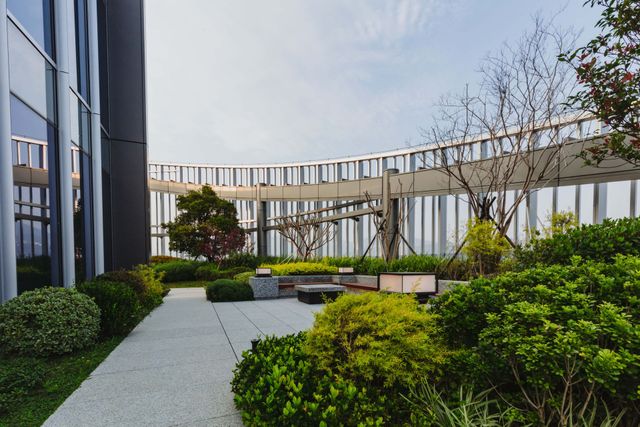
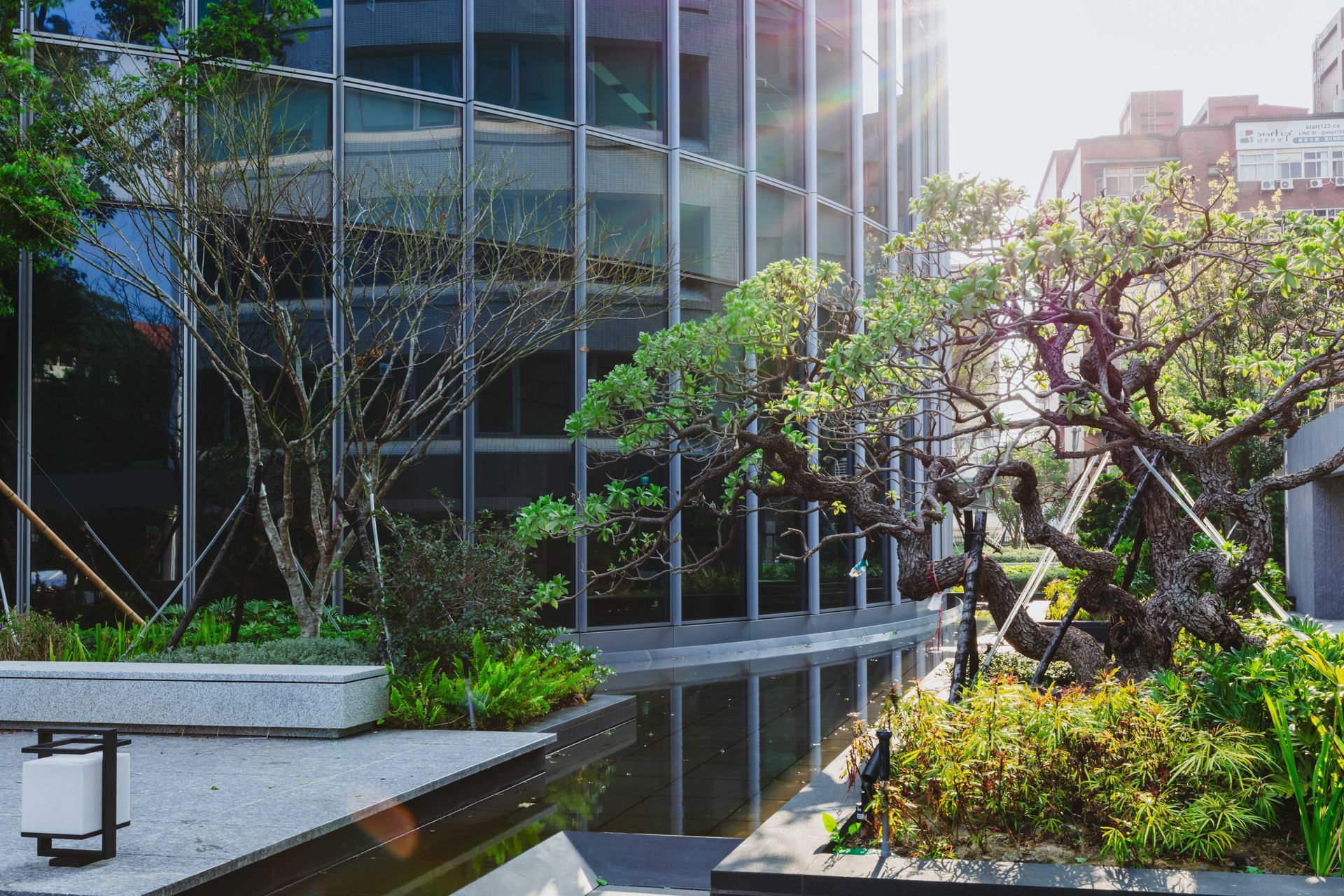
On how to achieve harmony between nature and architecture, Pan shares the core idea behind CAAM Chengde 168. The original intention was to create an ecological space that attracts diverse wildlife, such as nesting birds. "Being able to hear birdsong and feel that nature is right beside you is a wonderful thing." To maintain this environment, the team manages the landscape without pesticides, putting ecological friendliness and balance first.
Notably, the concept of "ecological stepping stones" was applied to the landscape design, creating layered habitats that give all kinds of plants and animals good conditions to thrive. "This is not just a design technique but an ecological philosophy that reminds us to respect the diversity of nature."
From cultural heritage to spatial innovation: reflections on architectural philosophy
The structural design of CAAM Chengde 168 carries the Eastern philosophy of "round heaven, square earth". "It symbolizes an attitude to life that is round on the outside and square on the inside, and echoes the spirit of sustainability and continuity in our culture." He explains that design details draw on the "square within a circle" of traditional coins, combined with modern functions that bring natural light indoors, giving every floor bright, open and high-performance space.
The basement also has a sunken courtyard, inspired by the parking area in front of the Agricultural Exhibition Hall at National Taiwan University. This design brings in more fresh air and lets natural light reach the interior, improving the quality of the space.
Heritage and vision of a family business
Chenyeh Chemical Works dates back to Pan's grandfather, who set up a factory in Shilin in 1954 (year 43 of the Republic of China). Thirty years ago, Pan's father decided to move the factory to New Taipei City, opening a new chapter in property development. Pan says: "Five years ago my father asked me to build this tower. What I thought about then was this: the company has been in Shilin for 70 years; has this place become any better because we are here? So we decided to build a Grade A office building that meets international green building standards."
The family is committed to a "lease, never sell" business model with long-term ownership at its core, and the building's name, CAAM Chengde 168, incorporates the initials of family members as a symbol of heritage and responsibility. He says this approach was deeply influenced by the way British family estates are managed. "Our responsibility is to build on the assets the previous generation left us and make good use of them." He believes the core value of a family business lies in long-term responsibility and continuity.
A green building vision: growing through challenges
On advancing green building, Pan speaks of his father's profound influence. A chemical engineering PhD from MIT, his father's support for and expectations of innovation laid an important foundation for the project. CAAM Chengde 168's LEED v4 CS Platinum certification reflects the family's commitment to sustainable development.
Even so, Pan admits the process was full of challenges, including construction difficulties, regulatory constraints and the impact of the pandemic. He believes the key to facing these problems is the attitude to solving them. "All I ask is that everyone gives their all." This positive thinking and problem-solving ability allowed the team to overcome difficulty after difficulty.
Looking ahead: from net zero to institutionalized practice
Pan hopes to turn sustainability from an "idea" into something "institutionalized". He believes companies should build out their ESG systems and, through collaboration, create a positive cycle of interaction across the supply chain. From carbon management to green power procurement, he hopes to deepen whole-life-cycle building management through technological innovation and data.
"Sustainable development doesn't happen overnight; it is a process of continuous growth." He believes that only by continuing to learn and improve can companies go further on the path of sustainability and create more value for the business.
Conclusion: the lessons and responsibilities of green building
Pan's experience shows the many challenges and endless possibilities of low-carbon transition and sustainable building. His focus and persistence show not only in technical matters but in deep thinking about nature, culture and responsibility. In the future, he hopes to realize the value and mission of green building through teamwork, institutional innovation and tireless effort, creating a more sustainable living environment for future generations.
About the interviewee
Pan Wei-hao, President, Chenyeh Chemical Works
A graduate of the Massachusetts Institute of Technology (MIT) with extensive international experience, Pan has worked at NERA, MicroStrategy and Intel. He currently serves as a director of Chia Hsin Cement, the Building Environment Education Foundation (建築環境教育基金會) and the Chia Hsin Zhao Fu Foundation (嘉新兆福基金會), and of CFA Society Taiwan.