


Chenyeh Chemical Works | LEED v4 CS Platinum
CAAM Chengde 168 Taiwan's first LEED v4 Core and Shell Platinum office tower
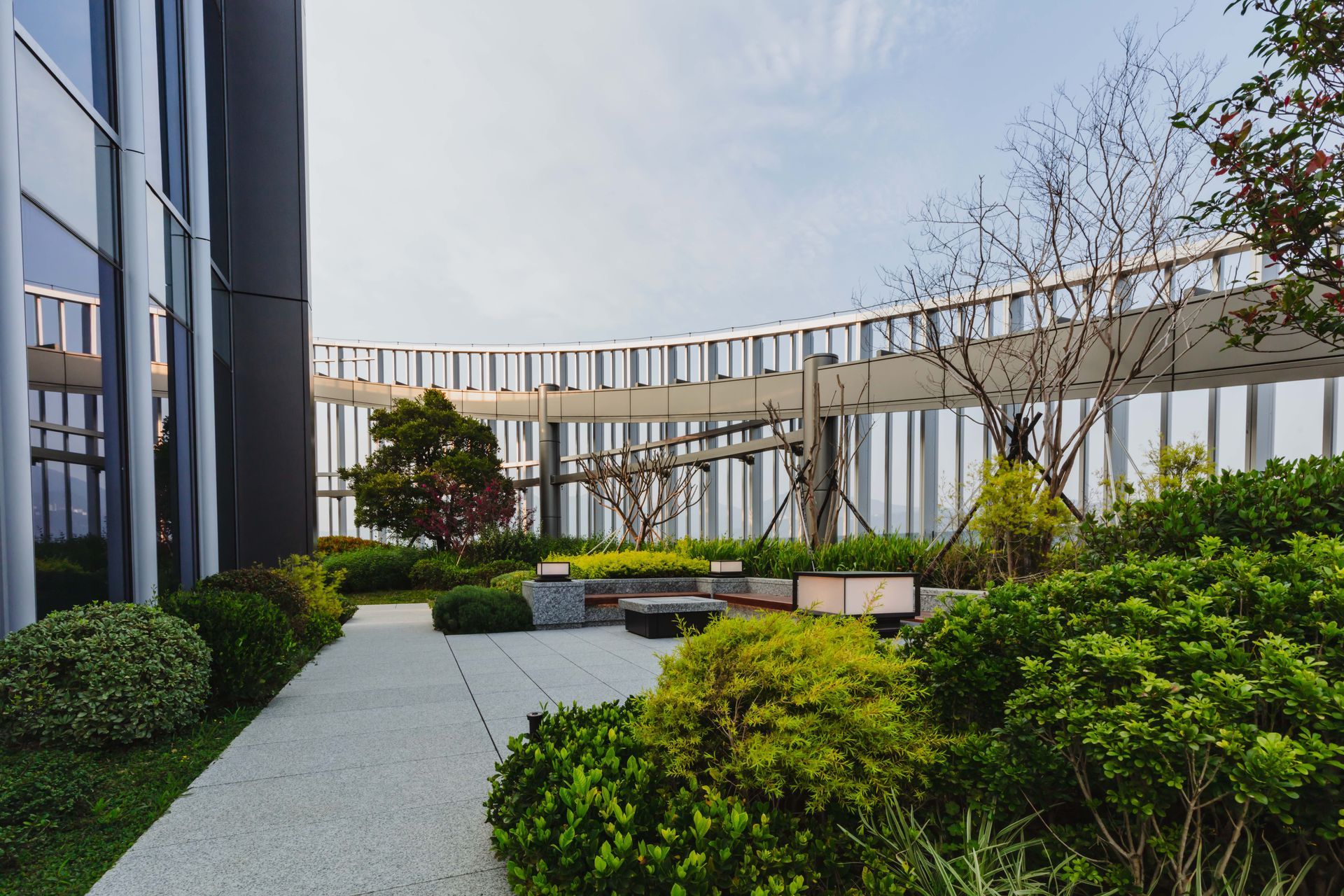
Designed around an "ecological green stepping-stone" concept, with greenery from the sunken plaza to the rooftop garden, and a steel structure chosen to cut embodied carbon from the start of construction.
Photo: Yuan Chuang Architects
01 Overview
Leading a new era of sustainable offices in Taiwan: CAAM Chengde 168
In September 2024, CAAM Chengde 168, a premium green office building, was officially completed. It is the first building in Taiwan to achieve Platinum certification under LEED (Leadership in Energy and Environmental Design) v4 CS (Core & Shell), the most credible green building rating system internationally. It marks a new era for the office sector's move toward sustainability, raises green building standards, integrates the United Nations Sustainable Development Goals (SDGs), and reflects the shared vision of CAAM Chengde 168 and GreenJump for low-carbon operation and energy saving.
The design concept of CAAM Chengde 168 comes from the "ecological green stepping stone", aiming to create harmonious coexistence with nature. On the technical side, the GreenJump design team used advanced energy modeling along with a high-efficiency air-conditioning system to ensure indoor comfort under extreme weather. The building also has a 250-tonne rainwater recycling tank that reuses water efficiently, laying a solid foundation for a future low-carbon economy.
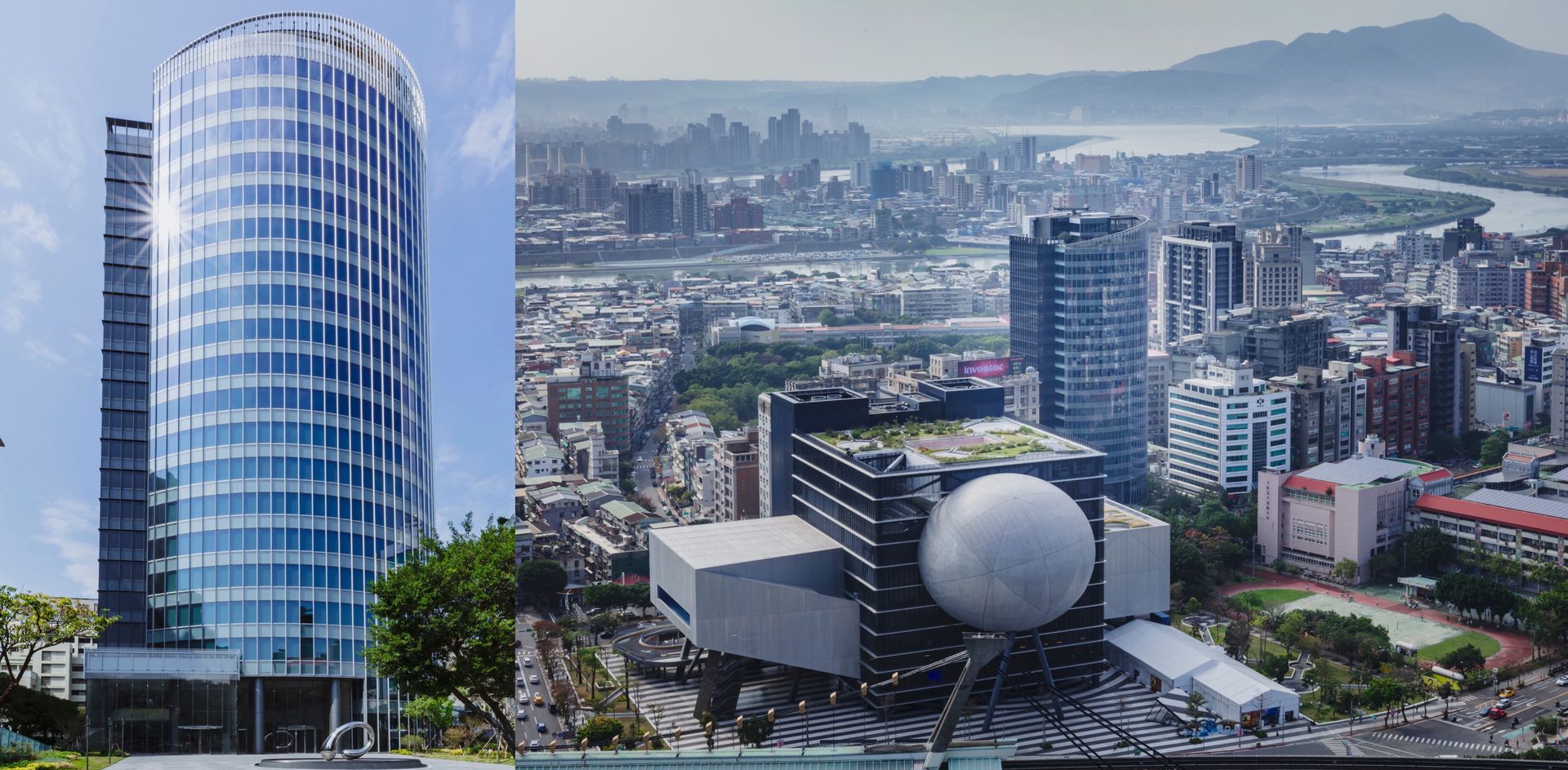
CAAM Chengde 168 and the surrounding blocks from the air, a LEED v4 CS Platinum office tower
02 By the numbers
CAAM Chengde 168 by the numbers
87 pts
LEED v4 CS Platinum
Achieved in August 2024, after Gold precertification (63 points) in 2020
29 %
Building coverage ratio
Commercial buildings in Taipei typically exceed 70%
67.5 %
Excavation ratio
Leaving room for plant roots to grow freely
250 t
Rainwater recycling tank
Collected rainwater irrigates the planting
11,400 m³
Less concrete
Structure switched from reinforced concrete to steel (adding 2,700 t of steel)
≈ 4,000 t
Lower-carbon cement mix
Carbon emissions saved by the TCC mix compared with ordinary (Portland Type I) cement
Sources: USGBC public project directory; project profile and interviews in Taiwan Architecture (台灣建築) Vol.352, January 2025; the "Opening preview" section on this page.
03 Design
CAAM Chengde 168 office tower: LEED v4 CS (Core & Shell) Platinum
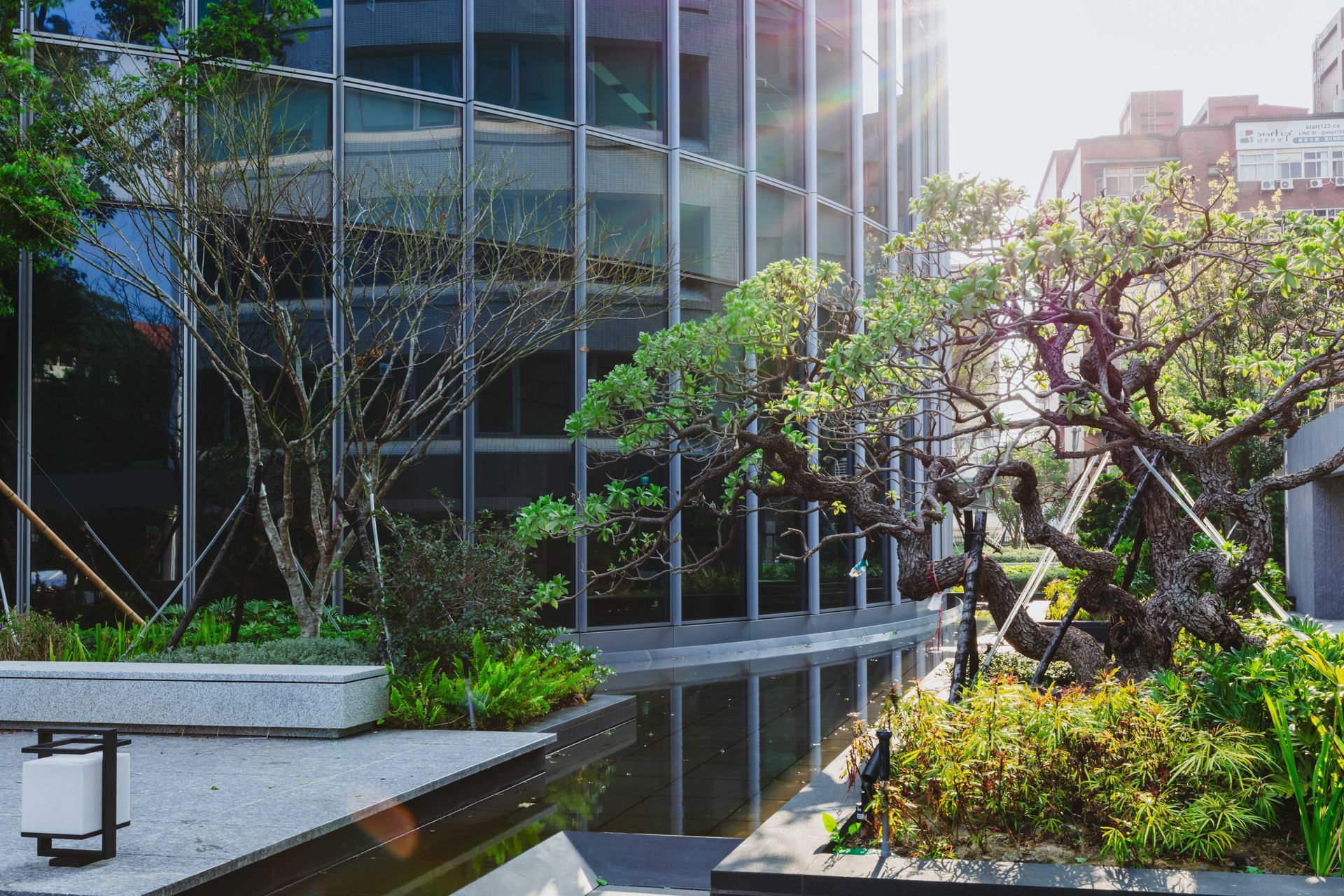
CAAM Chengde 168 stands along the Shilin-Beitou Science Park corridor in Taipei, right next to MRT Jiantan Station, facing the Taipei Performing Arts Center and Jiantan Mountain. Its design is based on the concept of an "ecological green stepping stone", fully integrating the natural environment and ecosystem. The building coverage ratio is about 29%, and the large green spaces improve the air quality of the site. The landscape uses native plants, which not only beautify the environment but also provide habitat for local wildlife.
The design looks beyond the needs of users to the wellbeing of the surrounding community, fully embodying the idea of "doing good together with the neighborhood". Accessible facilities make life easier for nearby residents, showing the company's commitment to social responsibility as it pursues sustainable development.
On the technical side, the GreenJump design team used advanced energy modeling to predict extreme weather that may occur in the future. For example, climate change may push Taipei's summer highs to 40°C, so a high-efficiency air-conditioning system was designed to keep the indoor environment comfortable even in extreme weather. This forward-looking planning shows an active response to climate change and deep concern for the wellbeing of users.
04 Energy & Water
Saving energy, cutting carbon and reusing water
The building also performs impressively on energy saving and carbon reduction. From early design through construction, the team used energy modeling to help the owner make the best design decisions and reduce the risk of high electricity bills in the future. The 250-tonne rainwater recycling tank reuses water efficiently and eases the load on the municipal water supply.
At the same time, climate modeling allows the building to adjust its energy demand to future climate change, keeping the indoor environment stable and comfortable.
05 Strategies
Green building strategies: from site ecology to embodied carbon
Compiled from this page and from the project profile and three interviews in Taiwan Architecture (台灣建築) Vol.352, January 2025 (full texts under In the news below).
Ecological green stepping stone
Site & Ecology- A building coverage ratio of about 29% and an excavation ratio of 67.5%, far below the 70%-plus typical of commercial buildings in Taipei
- Greenery from the sunken plaza to the rooftop garden, with native plants managed without pesticides
- Excavation avoided existing vegetation where possible, keeping root systems intact and improving resistance to typhoons
An envelope that cuts heat gain first
Envelope- Service core on the west side, with few windows and external service balconies, greatly reducing heat load
- Vertical shading on the curved east and north faces, with double-layer low-E extra-clear glass
- A grid-like shading curtain wall on the south face and a deeply shaded landscape balcony on the southeast corner
Energy modeling and high-efficiency HVAC
Energy Modeling & HVAC- Energy modeling introduced early in design to quantify window insulation, HVAC efficiency and lighting design
- A high-efficiency air-conditioning system designed for Taipei summer highs that may reach 40°C as the climate changes
- High-efficiency centralized air conditioning and energy-saving lighting on every floor
Rainwater reuse and water features
Water- A 250-tonne rainwater recycling tank supplies irrigation for the planting
- A 42 m landscaped water curtain wall and pond on the north side cool the area locally and temper the urban climate
Structure and materials with less embodied carbon
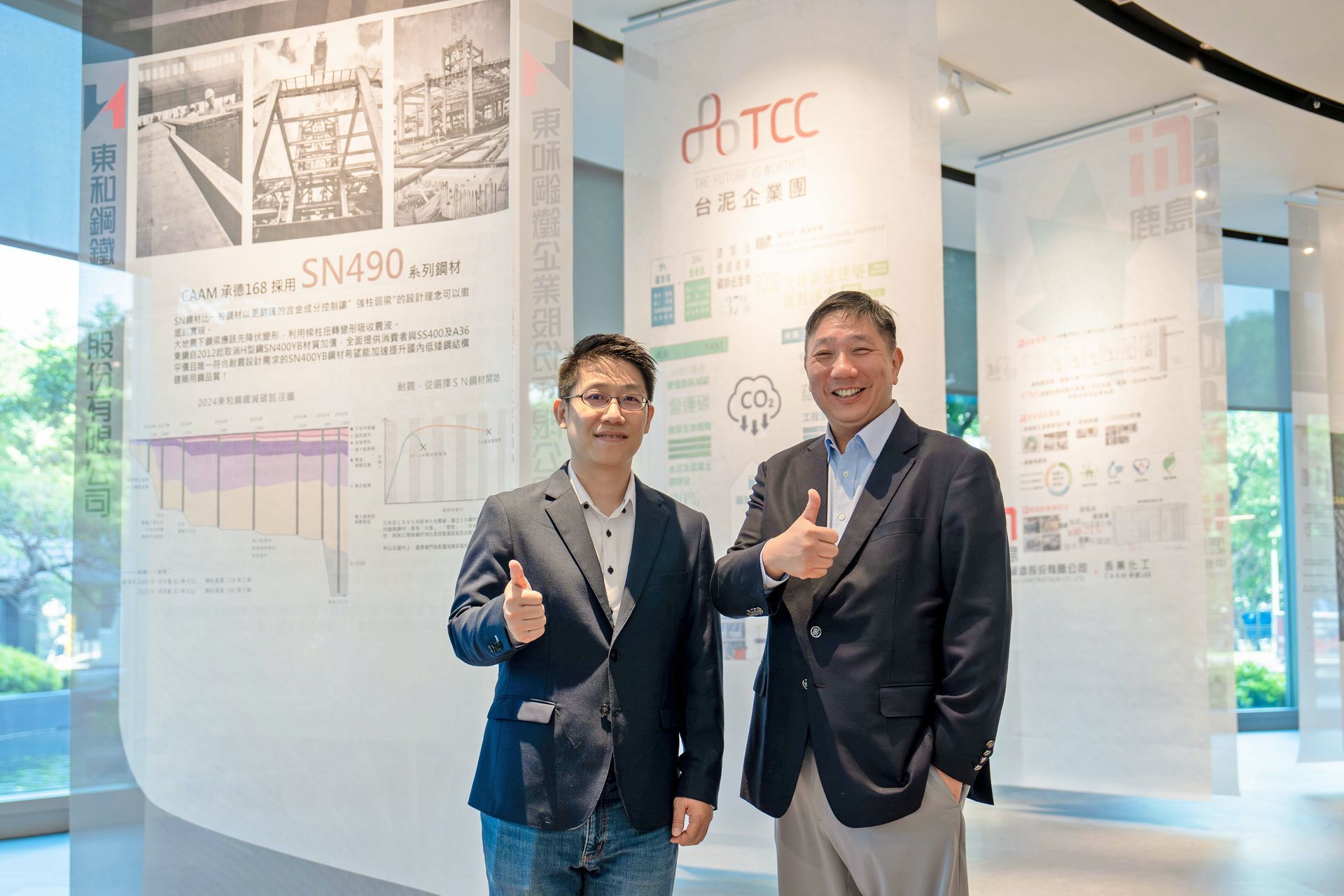
Embodied Carbon- Switching from reinforced concrete to steel cut 11,400 m³ of concrete and added 2,700 t of steel
- Based on its actual mix, TCC's cement saved about 4,000 t of carbon emissions compared with ordinary (Portland Type I) cement
- Steel from Tung Ho Steel, made in electric arc furnaces from recycled scrap (Scrap-EAF)
- Unitized curtain wall panels lifted into place without scaffolding, and top-down construction
Integrative design and good neighbors
Integrative Process & Community- Integrated design meetings brought the architect, engineers and construction team together to review progress and adjust strategy
- Accessible facilities serve nearby residents; more than 50 bicycle parking spaces at ground level
- A daylit courtyard on the west side connects to the basement, bringing light and air below ground
06 Opening Preview
Opening preview and LEED green building sharing session (2024)
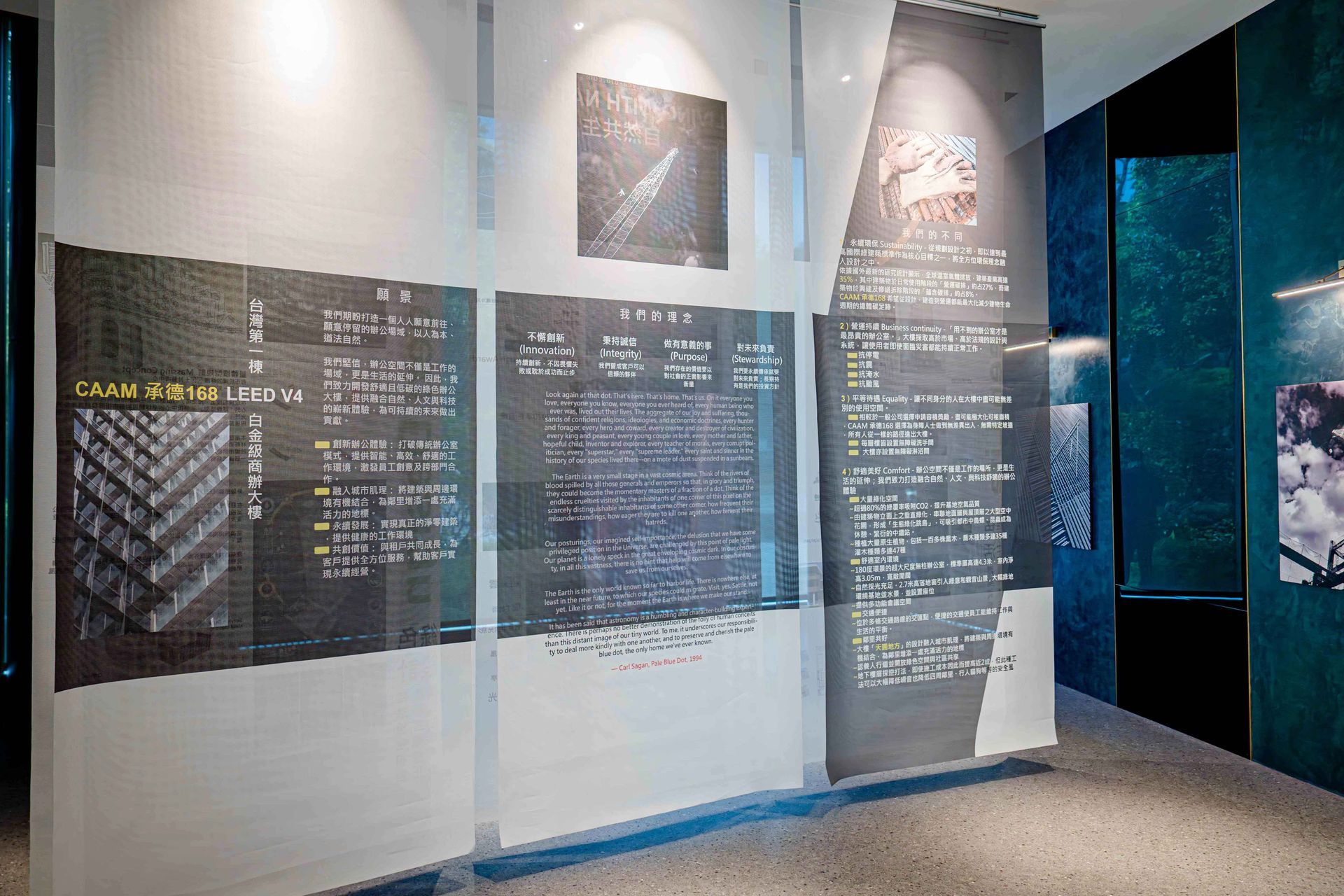
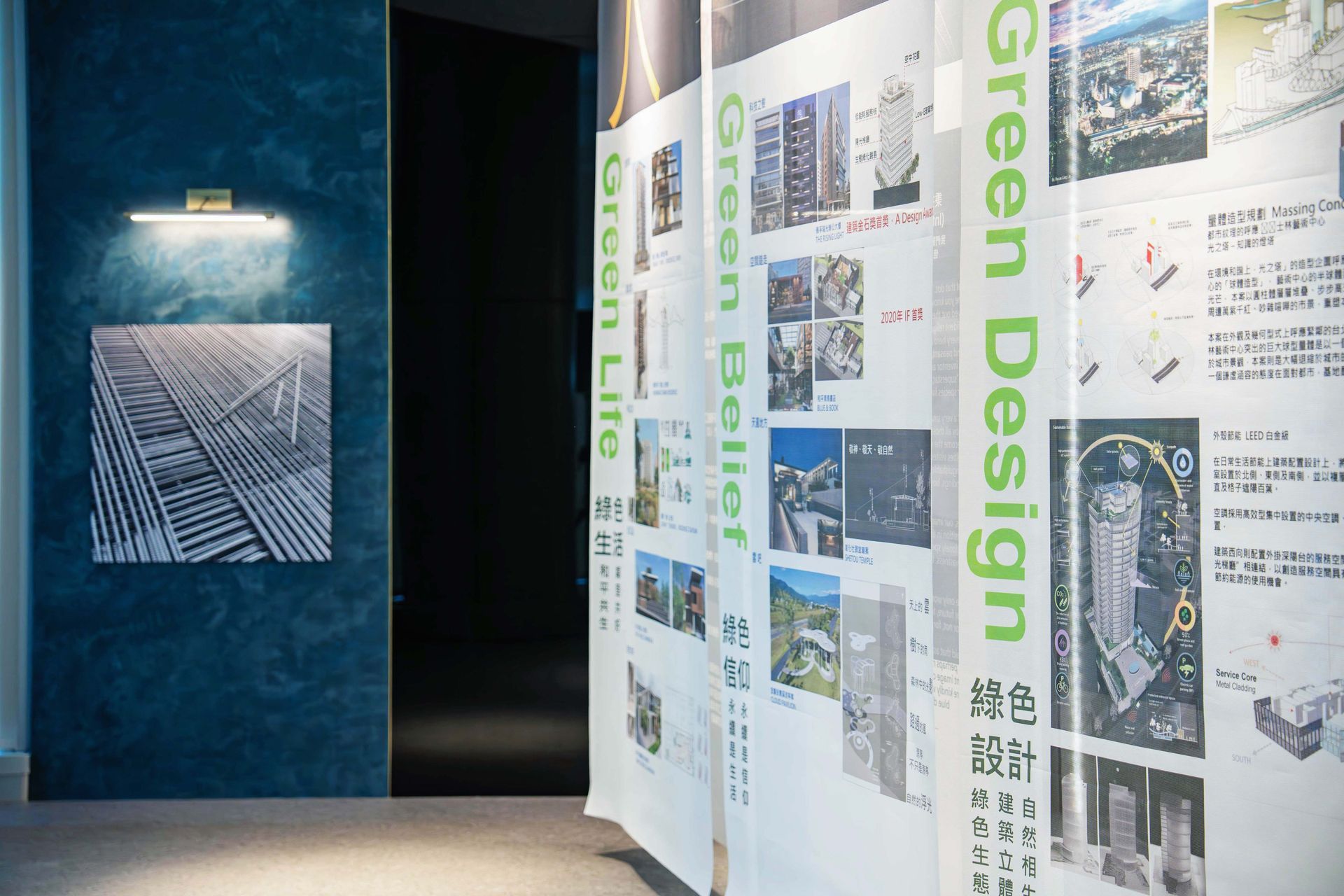
Green building exhibition
Dates: September 27 to November 29, 2024 (now closed)
Venue: 1st floor, CAAM Chengde 168
Address: No. 168, Sec. 4, Chengde Rd., Shilin District, Taipei
The CAAM Chengde 168 green building exhibition ran until November 29, 2024, and was open to interested industry visitors by appointment.
LEED green building sharing session
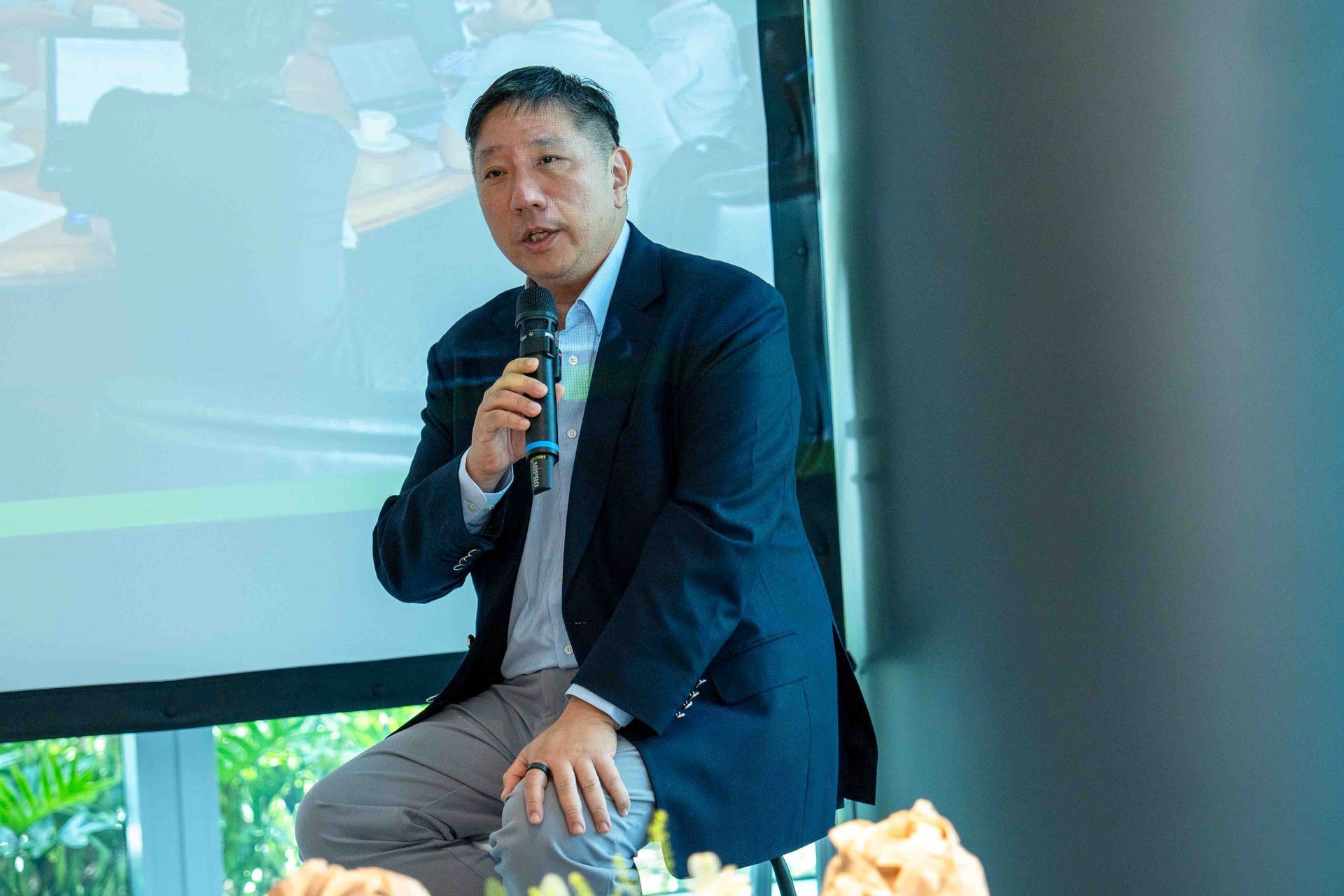
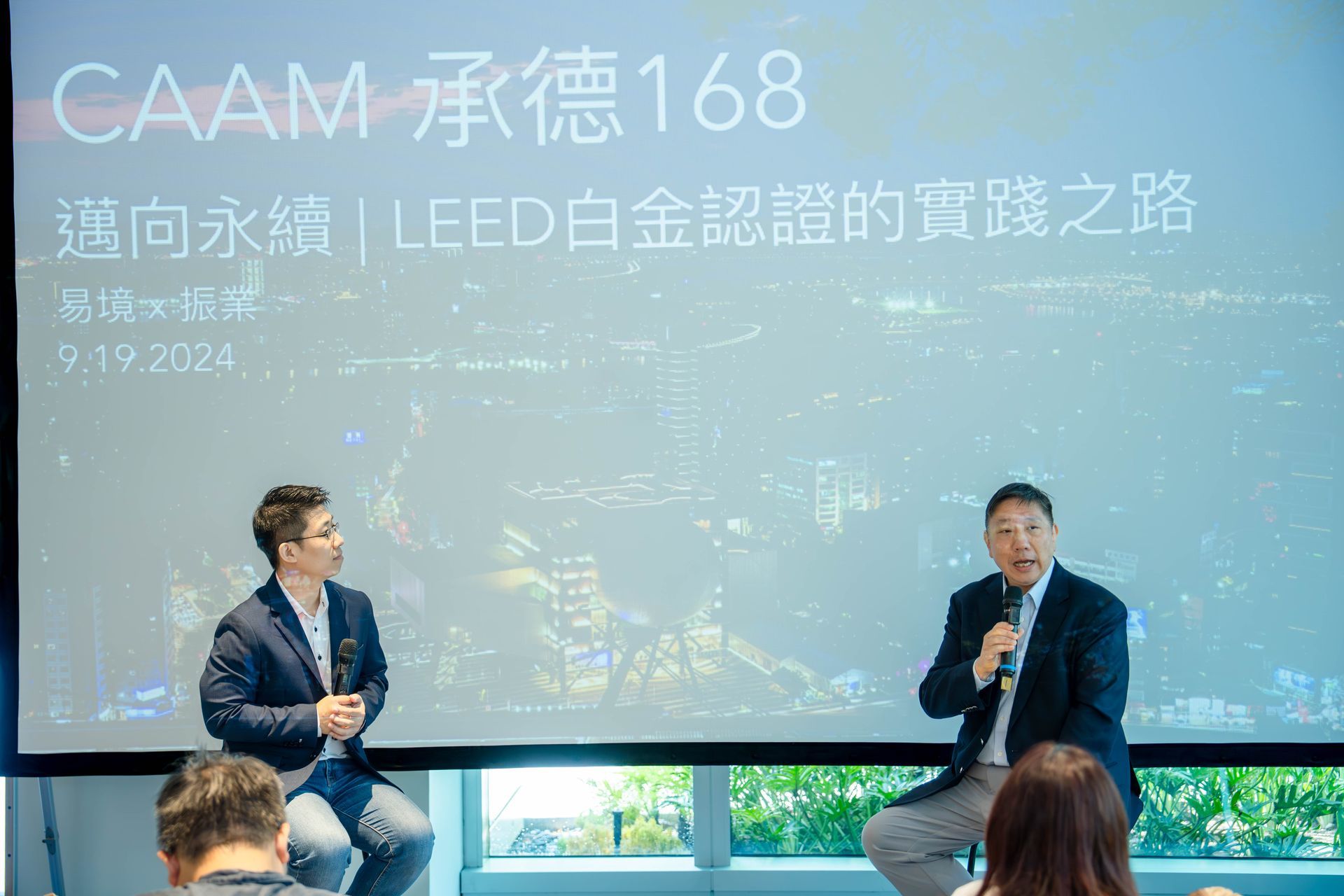
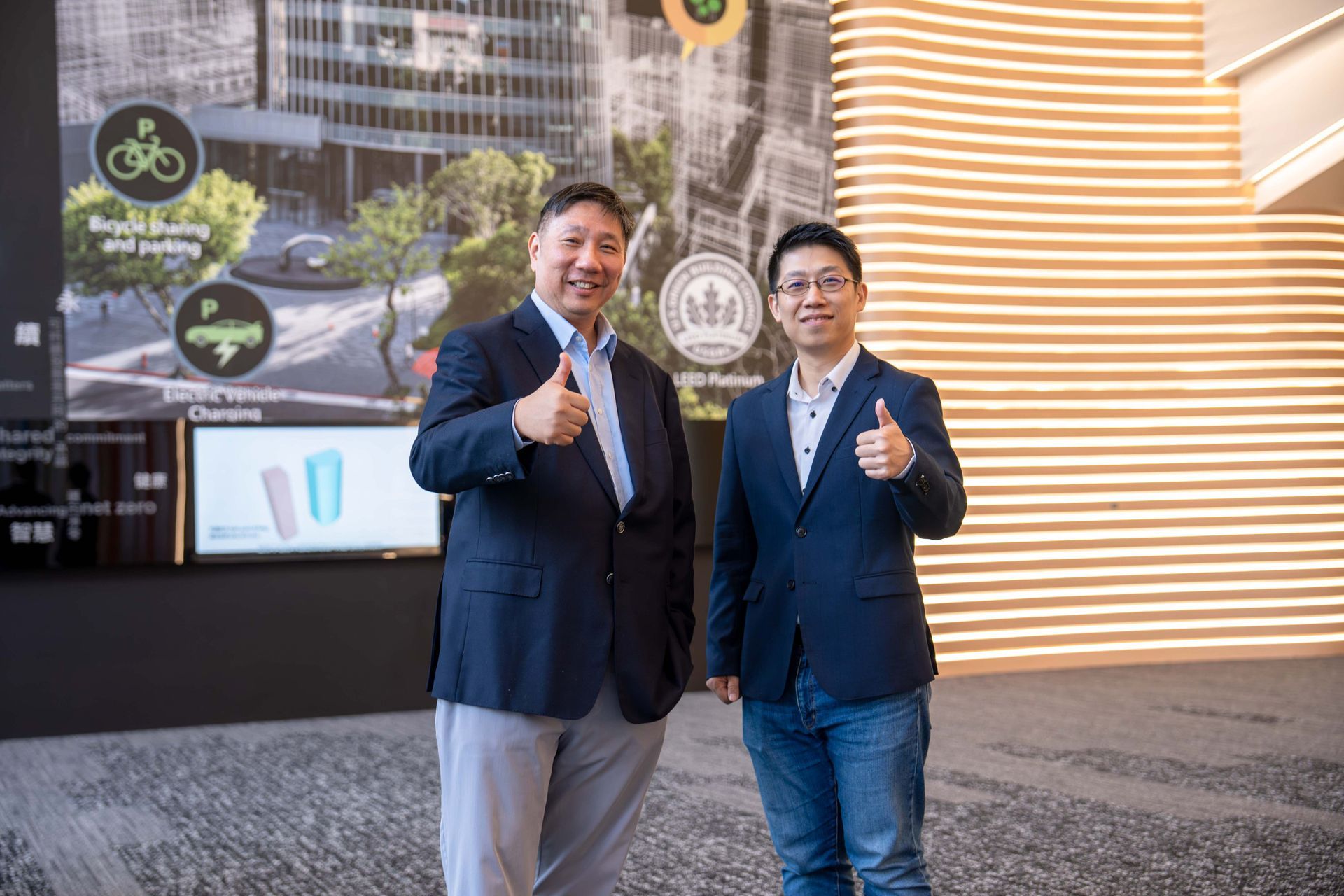
In September 2024, CAAM Chengde 168 and GreenJump held a LEED green building sharing session. Pan Wei-hao, President of Chenyeh Chemical Works, and Stan Ho, CEO of GreenJump, shared the design and implementation process and discussed in depth how office buildings can achieve sustainability and smart management. Through the green building exhibition at the time, visitors could learn about the green building design principles of CAAM Chengde 168 and see how advanced technology improves building management efficiency.
07 Commitment
Chenyeh Chemical Works' commitment to sustainability
As the driving force behind the project, Chenyeh Chemical Works has shown a long-term commitment to sustainable development. In the 70 years since its founding, the company has always cared about social responsibility. CAAM Chengde 168 is a landmark achievement after seven years of planning and design, responding to the international goal of net-zero emissions by 2050 and to the company's drive for sustainable offices and environmental protection.
With the completion of this LEED v4 CS Platinum building, Chenyeh Chemical Works has turned its former factory site into a modern green office building, reflecting its care for the environment and the community and showing what sustainable development looks like in practice. Pan Wei-hao, President of Chenyeh Chemical Works, said: "Five years ago my father asked me to build this tower. What I thought about then was this: the company has been in Shilin for 70 years; has this place become any better because we are here? So we decided to build a Grade A office building that meets international green building standards. During design we considered how to respond to different natural disasters and strengthen business continuity and building resilience, so that our tenants can keep operating whatever happens." This commitment to the future and to social responsibility makes CAAM Chengde 168 more than an environmental model; it shows how a company can give back to society with sustainability as its goal. Stan Ho, CEO of GreenJump, said: "CAAM Chengde 168 is not only a LEED v4 CS Platinum office building; it also demonstrates our commitment to the environment and sustainable development. Realizing this vision together with Chenyeh Chemical Works makes us excited about the future of green building."
08 Outlook
Future trends: buildings that do good together, and a model for sustainable building
GreenJump also shared a future trend: in design that does good for everyone, the biggest beneficiary is ultimately the developer. In today's real estate market, how to position a project and attract high-end tenants and buyers has become one of developers' main concerns.
As the world pays more attention to climate change and environmental protection, green design and sustainable development have become key elements of building planning that cannot be ignored. High-end real estate must consider not only appearance and function but also how a building can coexist with its environment, achieving both economic returns and environmental responsibility. This shared-benefit approach to design raises the value of the building and the wellbeing of the whole community, and has become an important strategy for attracting high-end clients.
Today, real estate developers must adopt green building strategies. This is not just a shift in market demand but a global trend toward sustainable development. The achievements of CAAM Chengde 168 in green building show how advanced technology and sustainability thinking can deliver design that benefits everyone, meeting the needs of users, the neighborhood and the ecosystem at the same time.
For developers, this shared-benefit design approach increases a building's market appeal and economic return, and demonstrates corporate social responsibility. In today's market, companies that integrate with nature and society and advance environmental sustainability will be more competitive.
Technical expertise and the road ahead
GreenJump demonstrated its technical capability to drive the green transformation of office buildings, using energy modeling to tackle high electricity costs. The LEED v4 CS Platinum certification of CAAM Chengde 168 shows its international influence, and GreenJump will continue to advance more building projects and build a sustainable future together with owners.
09 Timeline
Certification and project timeline
Certification dates and scores are from the USGBC public project directory.
- Sept 2019 Registered with USGBC under LEED v4 BD+C: Core and Shell
- Feb 2020 LEED v4 CS Gold precertification (63 points)
- Aug 2024 LEED v4 CS Platinum (87 points)
- Sept 2024 Building officially completed; CAAM Chengde 168 and GreenJump hold a LEED green building sharing session
- Sept-Nov 2024 Green building exhibition on the 1st floor (September 27 to November 29)
- Jan 2025 Taiwan Architecture Vol.352 publishes a project profile and three interviews (Pan Wei-hao, Wang Jo-lin, Stan Ho)
10 Voices
What they say
We have to get all the way to net zero, not stop at reducing carbon.
— Pan Wei-hao, President, Chenyeh Chemical Works (Taiwan Architecture, January 2025)I hope to see more buildings truly coexist with their environment: not only being kind to nature, but also deeply understanding the needs of the urban fabric. CAAM Chengde 168 is not only the work of the owner and the designers; we hope it can be an example that inspires the industry.
— Wang Jo-lin, architect, Yuan Chuang Architects (Taiwan Architecture, January 2025)11 In the news
In the news
12 FAQ
FAQ
What green building certification does CAAM Chengde 168 have?
What is the "ecological green stepping stone" design?
How did CAAM Chengde 168 reduce embodied carbon?
What energy- and water-saving design does CAAM Chengde 168 use?
What did GreenJump do on CAAM Chengde 168?
13 Sources
Sources
- USGBC public project directory: CAAM Chengde 168 (LEED v4 BD+C: Core and Shell Platinum, 87 points, 2024-08-30; Gold precertification, 63 points, 2020-02-26)
- Commercial Times (工商時報), 2024-09-18 (in Chinese)
- Taiwan Architecture (台灣建築) Vol.352, January 2025: project profile "Chenyeh Chemical Works CAAM Chengde 168 Office Building" and interviews with Pan Wei-hao, Wang Jo-lin and Stan Ho (interviews and text: Tien Ko-liang)
Work with GreenJump
Plan your LEED certification with GreenJump
GreenJump is a LEED consultant based in Taipei, supporting projects all the way from energy modeling to certification.

